Small Business Website Design: A Practical Guide for Companies
Every legitimate business in 2026 needs more than a social media presence—it needs a professional website that works around the clock. This guide walks you through the complete website design process, from clarifying your goals to launching a site that actually drives results.
Key Takeaways
- A modern, fast, secure website is mission-critical for any small business in 2026 because it directly impacts trust, lead generation, bookings, and sales—high-performing websites are now viewed as “24/7 revenue team members” that prioritize clarity and trust.
- Drag and drop website builders are useful starting points, but serious companies often outgrow DIY tools and benefit from a managed solution like EZPages.Pro.
- Strategic website design covers brand clarity, UX, SEO, performance, and compliance (ADA, GDPR, CCPA)—not just visuals.
- EZPages.Pro designs, hosts, and fully manages small business sites on AWS so owners can focus on running their companies.
- This article includes a step-by-step website design process, realistic cost ranges, and a comprehensive FAQ section at the end.
Why Your Company Needs a High-Performing Website in 2026
Customer expectations have shifted dramatically since 2020. Mobile-first behavior accelerated during the pandemic, and by 2026, approximately 68% of web traffic comes from mobile devices. Users expect every legitimate company to have a professional, mobile-friendly site—and 53% will abandon any site taking over three seconds to load.
Social media profiles on Instagram, TikTok, or Facebook are rented space. Algorithm changes can slash your visibility overnight. A website is an owned asset you fully control. Every business needs a central place where customers can find accurate information, and a website provides control and consistency that social platforms cannot offer.

Concrete customer actions that typically start on a company site include:
- Checking opening hours and location details
- Booking appointments or consultations
- Requesting quotes or estimates
- Reading reviews and testimonials
- Making purchases directly
Google Business Profile, Apple Maps, and other directories increasingly rely on your website’s data, structure, and reviews to determine visibility. A website can help businesses capture leads and propel their brand in the digital space, making it essential for reaching more customers.
EZPages.Pro serves as a partner that builds and runs high-performance, secure websites with custom design and SEO features on AWS, eliminating the need to juggle multiple website builders, plugins, and hosting contracts for small businesses that recognize how critical a professional website is, and their fast, secure, fully managed website solutions help companies get online quickly without sacrificing quality.
Plan Before You Design: Clarifying Business Goals and Audience
Design decisions must follow business strategy, not the other way around. Before choosing a platform or theme, it’s essential to define your site’s core purpose, as different types of websites require different tools and features, and there are smart steps small businesses can take today to boost their website success by aligning goals with their online presence.
Start by setting 1–3 measurable goals:
- Generate 40+ quote requests per month
- Increase booked consultations by 25%
- Achieve 10% growth in online sales by Q4 2026
Define your target audience with specifics. Are you targeting local service clients (plumbers, dentists), regional B2B buyers, or national e commerce customers? Each requires different messaging and features.
Map customer journeys from a Google search or Instagram post to landing page, to contact form or checkout, to follow-up email. Planning website content around audience needs helps drive conversions. Having a website allows businesses to showcase their products or services, announce promotions, and provide essential information like business hours, contact details, and detailed product descriptions where relevant, which is crucial for customer engagement.
EZPages.Pro runs a short onboarding workshop with new clients to capture these goals and user journeys before any design work begins, aligning the build with proven small business website tips.
Choosing the Right Website Builder: Platform vs Managed Service
The main options for companies include DIY website builders (Wix, Squarespace, Canva, GoDaddy Website Builder, Hostinger Website Builder, and Webflow), semi-custom WordPress, and fully managed services like EZPages.Pro’s small business website builder and managed platform.
Choosing the right website builder depends on your business goals and how tech savvy your team is. A small business website builder can be a practical DIY option because it combines drag and drop editing with built in SEO tools, while a managed service is better when you want strategy, setup, hosting, and ongoing support handled for you.
DIY builder pros:
- Low upfront cost ($15–$40/month)
- Hundreds of free templates
- Intuitive drag and drop editors
Wix offers over 1,000 customizable business templates. Squarespace is often a strong fit for service-based businesses with elegant designs.
DIY builder cons:
- Time drain (62% of SMBs using DIY tools report spending 5+ hours weekly on maintenance)
- Plugin conflicts and performance issues at scale
- Limited customization for complex needs
Most website builders provide free plans with subdomains, but for a more professional appearance, using a custom domain is recommended. Webflow offers advanced no-code design flexibility for users who need more control.
Drag and drop tools shine for solo founders validating an idea, early-stage landing pages, or simple one-page sites with minimal traffic. Hostinger offers budget-friendly plans starting at $2.49/month, making the best website builder for cost-conscious teams worth comparing against other platforms. Graduate to a managed service when you have multiple locations, online bookings, HIPAA-sensitive inquiries, ADA compliance needs, or when you’re spending more than 3–4 hours monthly fixing your site.
EZPages.Pro provides custom-designed, fully managed small business websites atop a proven platform (Duda) hosted on AWS with uptime monitoring, security patches, and backups handled automatically, following a high-performance, secure, custom web design approach that keeps sites fast and future-proof.
Core Principles of Effective Small Business Website Design for Companies
Good website design is equal parts branding, user experience, content, and technical foundations, and strong web design ties those pieces together. Here are a few practical design tips for building a good site.
Visual branding basics:
- Consistent logo usage across all pages
- 2–3 core brand colors (colors should be chosen thoughtfully—blue conveys trust and stability while green signifies growth)
- No more than three fonts for clarity, typically headings and body styles only
Using a consistent visual identity reinforces brand recognition and memorability across all website pages. Customizing a website allows businesses to reflect their unique brand identity through tailored design elements such as color palettes, fonts, and layouts. Great photography accounts for 80% of website appeal.
User experience principles:
Effective navigation should be intuitive, avoiding user cognitive overload. User navigation should be kept simple with only 5-7 main options to prevent decision paralysis. Structure pages logically: Home, About, Services, Pricing, FAQ, Contact.
Calls-to-action (CTAs) should be designed to stand out with high visual contrast and action-oriented verbs like “Book a Call” or “Get a Quote.” Strategic use of white space can help reduce clutter and guide user focus toward key messages and CTAs. You should also balance text with images and spacing to keep layouts easy to scan.
User judgments about websites can be formed in as short as three seconds, making clarity essential. Transparent website practices, including clear pricing and privacy policies, can enhance perceived legitimacy.
A well-customized website should maintain consistency in branding across all elements, including colors, fonts, and imagery, to enhance professionalism and user experience.
EZPages.Pro designs each company site around a primary CTA and ensures the above-the-fold section answers “what you do, where you do it, and what to do next” within 3 seconds to help turn website visitors into customers by applying conversion-focused website design strategies that drive growth.
Step-by-Step: How to Design a Company Website
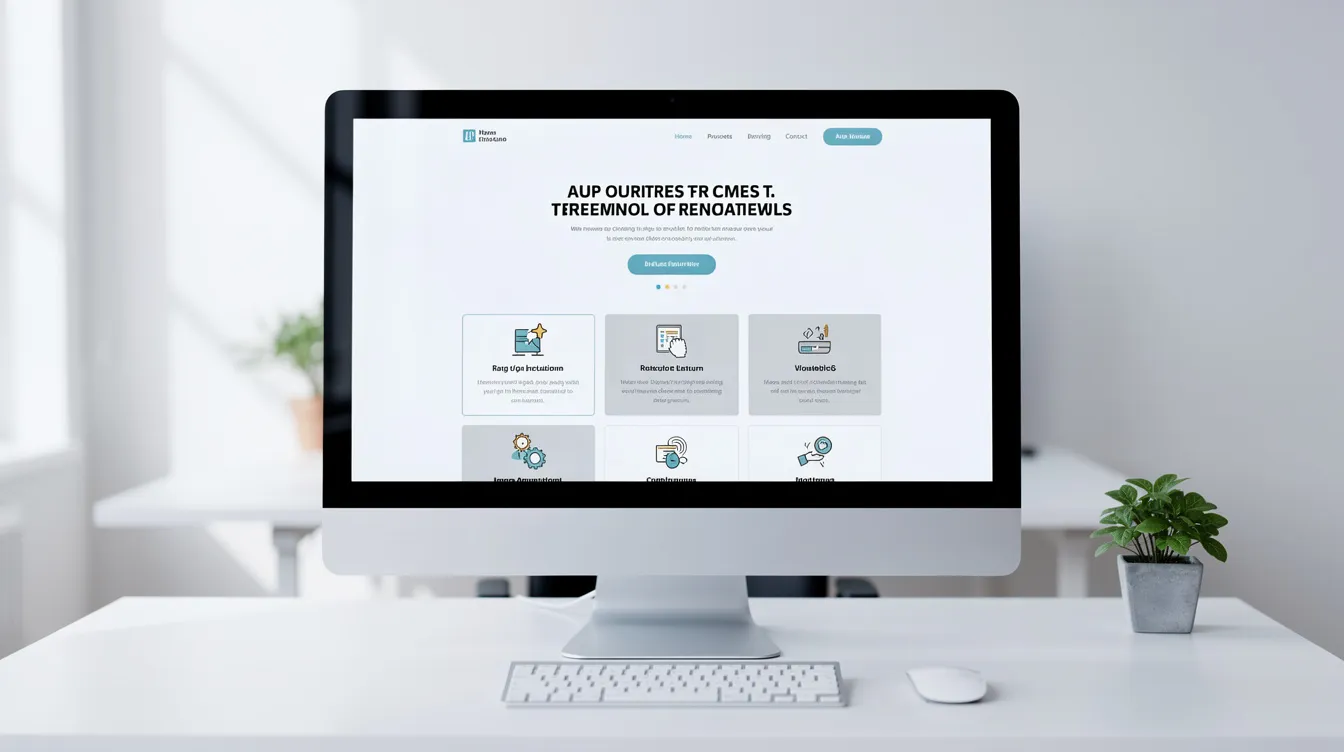
Designing a website isn’t difficult, but most small business websites follow the same planning sequence, especially when using a website builder, because a clear process prevents costly missteps.
Create a simple sitemap first:
- Home
- Services (or Products)
- About
- Case Studies/Portfolio
- Blog
- Contact
- Location pages (for multi-office businesses)
Choose a layout or template. Templates provide structure with prebuilt layouts for common pages, so you can start with a professional layout and then customize it for your brand instead of building from scratch. Using templates as a starting point for website design can help ensure a professional look, but customization is essential to avoid a generic appearance.
Wireframe each page by sketching sections: hero, trust signals, services overview, testimonials, FAQs.
Create content: Draft copy for each core page, gather website content, and collect real photos from recent jobs or team shoots so the site feels fully functional and credible. High-quality visuals, including authentic imagery rather than stock photos, help build brand credibility. Good photography makes up 80% of website design quality.

Designing the Homepage
A strong company homepage needs 6–8 concrete content blocks:
Hero section requirements:
- Clear headline stating what you do
- Subheadline with key differentiator
- Primary CTA button
- Supporting image or short video
- Visible contact info for phone-centric businesses
- A clear flow from headline to CTA that creates a seamless experience
- A short trust-building note, because a great website should reassure visitors fast and guide them toward action
Social proof near the top: Social proof, such as customer testimonials, can significantly enhance a brand’s credibility. Add review snippets from Google, Trustpilot, or Yelp, plus recognizable client logos or metrics like “Serving 2,300+ customers since 2015.” Email opt-ins should be strategically placed on every page, including the homepage when relevant.
Services grid: Summarize 3–6 core services in a visually separated layout, linking each card to a dedicated service page for SEO and clarity, and to dedicated product pages when the business sells physical or digital goods.
About teaser: Include a photo of the founder or team with a link to the full About page.
Designing Key Supporting Pages
Services page: Break offerings into categories with clear benefits, typical timelines (e.g., “Projects delivered in 4–6 weeks”), and starting price ranges. For product-based businesses, include product descriptions with detailed information on each relevant page.
About page: Include company history with actual founding year, mission statement, leadership photos, and certifications or industry memberships.
Case Studies: Highlight 2–6 real projects with a problem-solution-result format, including metrics like “increased lead volume by 37% in 90 days,” showing how you’ve implemented essential website features that drive business success.
Contact page: Offer multiple contact methods—form, phone, email, map embed, and business hours. Businesses with physical locations should keep in store details aligned with the website. Reducing the number of form fields can boost conversions by up to 120%. Test rigorously before launch. Supporting pages can also include email capture opportunities to build a subscriber list.
Design vs DIY: How EZPages.Pro Helps Companies Go Beyond Templates
DIY website builder templates often leave small businesses looking generic, while a skilled web designer can tailor a custom implementation to each company’s workflows.
EZPages.Pro’s process:
- Discovery call
- Content and brand intake
- Design mockups
- Revisions
- Launch (often in a few weeks, though more involved builds can take several weeks)
EZPages.Pro leverages a drag and drop editor internally (Duda) but shields clients from technical chores like plugin conflicts, hosting migrations, security patches, and ongoing maintenance through fully managed website services and a broader professional website management service that keeps everything running smoothly over time, illustrating the benefits of comprehensive managed website services for busy teams.
Integrated features EZPages.Pro configures:
- Online booking for salons and clinics
- Live chat for service firms using tools like the Chaty website chat app integration
- Search functionality for content-heavy sites
- Secure contact forms for regulated industries
EZPages.Pro handles all the tools needed for hosting, SSL certificates, analytics setup (Google Analytics 4 and privacy-friendly alternatives), and uptime monitoring under a single monthly plan, so clients do not have to manage technical setup themselves; if they prefer, they can still create their own site with a builder, but the managed approach removes the hands-on burden while delivering high-performance, secure, custom websites.
Technical Essentials: Performance, SEO, and Compliance
Modern company websites must be fast, searchable, and legally compliant.
Performance matters: Aim for a load time under 2-3 seconds to improve user experience, search rankings, and overall site speed. Each 100ms delay in loading can reduce conversions by up to 7%. Sites that load within three seconds experience 70% longer user sessions compared to slower sites, which can also help lower bounce rate and drive more traffic. Core Web Vitals (largest contentful paint, cumulative layout shift, interaction to next paint) directly affect Google rankings. Optimizing images can reduce page load time significantly.
SEO basics: Search engine optimization (SEO) helps your site rank in search results so people can find it, balancing content for your audience with signals that search engines understand, and many essential SEO tools for small businesses can make this process more effective and data-driven, while built in SEO tools help non-technical users handle the basics more easily. Metadata, including page titles, descriptions, image alt text, and captions, are crucial for search engines to understand your content. Internal and external links are important for SEO; linking to your own content helps guide users deeper into your site, while credible third-party links establish context, especially when combined with dedicated local business SEO management.
Compliance requirements: Implementing website compliance with ADA, WCAG, GDPR, and privacy policies reduces legal risk while protecting your users and your brand; understanding the essentials of website compliance for businesses helps you bake these requirements into your site from day one.
- ADA-friendly design: Following WCAG standards ensures accessibility, including high color contrast and alt text for images, as part of broader website compliance for accessibility and privacy and a solid grasp of web accessibility laws and what you need to know; reviewing a full guide on what every business needs to know about website compliance can clarify your obligations.
- GDPR/CCPA cookie banners and clear website legal disclaimers and privacy policies, alongside a commitment to enhancing accessibility through inclusive website design that aligns with the practices outlined in the EZPages.Pro website disclaimer and policies
- SSL/TLS encryption (HTTPS) is essential for securing sensitive areas of websites and building user trust, and it should be paired with consistent, professional website management practices; that is especially important on WordPress ecosystems, since WordPress.org powers roughly 40% to 60% of all websites globally.
A mobile-first website design should consider thumb-friendly navigation and large tap targets for the 68% of visitors browsing on mobile devices.
EZPages.Pro pre-configures caching, image compression, schema markup, and accessibility patterns across all client sites, then audits them at least annually, layering in integrated apps that extend website functionality where they support your goals and aligning everything with small business web management best practices backed by a professional website management service.
Estimating the Cost of Website Design and Ongoing Management
Costs vary by complexity, industry, and whether you use a DIY website builder, managed service, or solution with ecommerce platform requirements; some plans include a free domain, while others charge separately.
| Option | Initial Cost | Monthly Cost | Your Time Investment |
|---|---|---|---|
| DIY Builder | $0–$200 | $15–$40 | 8–12 hours/month |
| Freelancer | $1,000–$5,000 | Varies | 2–4 hours/month |
| Agency/Managed | $3,000–$15,000+ | $100–$500 | Minimal |
Shopify starts at $5/month for a basic eCommerce setup.
Typical line items:
- Design and copywriting
- Development or configuration
- Brand photography
- Hosting and security
- Domain registration
- Integrations (booking, chat, forms)
- online store setup and sales-related features, which often add costs beyond brochure-style sites
EZPages.Pro offers affordable website plans for startups and small businesses and comprehensive website management services for small business growth that include design, hosting on AWS, maintenance, security updates, monitoring, and support under predictable monthly or annual schedules, with flexible website plans for startups and small businesses tailored to different stages of growth.
Factor in the value of your own time. If you’re a founder earning $100/hour, DIY design becomes a significant hidden expense.
When to Redesign or Upgrade Your Company Website
As a business grows, the website should evolve too. Most small business sites should see meaningful updates every 2–3 years. Optimization of websites is an ongoing process, not limited to an initial launch.
Clear signals it’s time to redesign:
- Outdated branding that no longer reflects your company
- Non-responsive layouts on mobile devices
- Slow page loads affecting conversions
- Declining leads despite steady traffic
- Security warnings in browsers
New services, new locations, or a shift in target market often make original website structure and messaging obsolete, and adding new pages is a common upgrade as offerings expand. As needs become more complex, even solid site design can start to feel limiting. Technology shifts—such as changes in Google’s ranking factors or new privacy regulations—may require structural updates behind the scenes and support better digital marketing performance.
Regular A/B testing of website elements like headlines and CTAs can help optimize user engagement over time.
EZPages.Pro clients receive ongoing improvement recommendations and can request design refreshes without starting from scratch or changing platforms, and they can reach out directly to discuss updates or new projects.
Frequently Asked Questions ABOUT A Practical Guide for Small Businesses
How long does it typically take to build a company website with EZPages.Pro?
Most standard small business sites (5–10 pages with basic integrations) launch within 2–4 weeks after content is approved. Simple sites may be finished faster, while more complex builds with e commerce, member areas, or custom app integrations often take several weeks, sometimes 6–8 weeks depending on feedback speed. EZPages.Pro uses a defined project timeline with milestones so clients always know what is happening and when, with the goal of a fully functional launch rather than a quick draft.
Can EZPages.Pro migrate my existing website from Wix, Squarespace, or WordPress?
EZPages.Pro routinely migrates sites from WordPress and other platforms, preserving URLs where possible to protect SEO. The team typically rebuilds the web design to modern standards rather than simply copy the old look, imports or recreates content, and sets up redirects from old pages. Expect a brief planning phase to audit existing content, analytics, and search rankings before migration.
What if my company doesn’t have any copy or photos ready yet?
EZPages.Pro can provide copywriting services to draft on-brand text for all core pages based on an interview and existing marketing materials. The team can work with existing smartphone photos initially, then swap in professional photography later without redesigning the entire site. At minimum, prepare a short summary of your services, service areas, and any must-include certifications before kickoff.
Do I still need to think about SEO if EZPages.Pro handles my website?
EZPages.Pro implements technical and on-page SEO best practices out of the box, including structured headings, meta tags, and fast hosting. Business owners should still participate by approving keyword focuses, publishing new content, and gathering reviews linked from the site. For competitive industries, clients may complement the site with ongoing SEO campaigns, content marketing, or paid ads.
What ongoing work is required from my side after launch?
EZPages.Pro handles hosting, security updates, backups, uptime monitoring, and core design maintenance under the managed plan. Your team will occasionally need to provide updated information: new services, team changes, holiday hours, new testimonials, and case studies. Most small business owners only need to email updates a few times per quarter while EZPages.Pro takes care of implementing them correctly.
Your website works around the clock—even when you don’t. In 2026, the question isn’t whether your company needs a professional site, but whether your current site is helping or hurting your growth.
Ready to stop wrestling with plugins and start focusing on your customers? Contact EZPages.Pro to explore how a managed website can free up your time while driving real results.

EzPages.Pro specializes in small business web management and web development for small businesses and startups. Our tailored solutions simplify content updates, track performance with analytics, and ensure smooth site operation. With our all-in-one management services, you can focus on growing your business while we handle the rest.
🚀 Let’s build something great together.
EZPages blog