Essential SEO Tools for Small Businesses
In today's digital world, having a strong online presence is key for small businesses to succeed. Christine Darby says knowing SEO basics is essential for online success. EZPages.Pro helps by creating, updating, and hosting websites for companies and startups. This guide covers the most essential SEO tools for small businesses, including keyword research, on-page optimization, technical SEO, and analytics platforms.
This article is designed as a comprehensive guide for small business owners and marketers who want to improve their online visibility and drive growth. By understanding and choosing the right SEO tools, small businesses can maximize their marketing efforts, compete with larger companies, and achieve measurable results. The right tools not only save time and resources but also provide actionable insights that are crucial for online growth and long-term success.
Choosing the right mix of SEO tools is especially important for small businesses with limited budgets and resources. This guide will help you identify which tools are essential, how to combine free and premium options, and why each tool matters for your business goals.
KEY TAKEAWAYS
- Understanding SEO is crucial for online success.
- EZPages.Pro offers tailored website solutions.
- Comprehensive management services are available.
- SEO tools can improve online visibility.
- Targeted audience reach is enhanced with SEO.
Understanding the SEO Landscape for Small Businesses
The SEO world is always changing, offering both chances and hurdles for small businesses. As search engines get better at what they do, knowing SEO well is key for growth.
Why SEO Matters for Local Business Growth
SEO is key for small businesses because it affects how visible they are online. By making their online presence better, they can draw in more local customers.
Increased Visibility in Local Searches
Most people use search engines to find local businesses. Being at the top of these results is crucial. Local SEO strategies can really help a business stand out, bringing in more customers.
Building Trust and Credibility
A good website not only gets more visitors but also builds trust. By showing up in search results often, businesses can be seen as experts in their field.
The Challenges Small Businesses Face with SEO
SEO can be tough for small businesses, especially with limited resources and big competition.
Limited Resources and Budget Constraints
Small business owners often have to start with affordable options before investing more heavily in SEO, so free SEO tools can be a practical first step before moving to paid tools or broader seo software. But, there are affordable SEO services that can help.
Competing with Larger Businesses
Small business owners often compete against bigger companies with more money and teams for SEO, making it hard to keep up. Free SEO tools are often enough to start, while paid tools and broader SEO software become more useful as needs grow for competitor research and competitor analysis. But, focusing on local SEO for small businesses can help them find their place.
| SEO Challenge | Impact on Small Businesses | Potential Solution |
|---|---|---|
| Limited Resources | Reduced ability to invest in SEO | Affordable SEO services |
| Competing with Larger Businesses | Difficulty in ranking higher in search results | Focus on local SEO |
Transition: Now that we've explored the unique challenges and opportunities small businesses face in the SEO landscape, let's dive into the core principles that drive effective search engine optimization for small businesses.
The Fundamentals of Small Business Search Engine Optimization
Before diving into specific tools, it's important to understand the foundational elements of SEO for small businesses. Small businesses should prioritize analytics, keyword research, and local SEO to build a strong online presence. By focusing on these areas, you can lay the groundwork for sustainable growth and improved search visibility.
Competitor Analysis
For small businesses, understanding SEO is key to boosting their online presence. Competitor analysis and competitor research can also reveal gaps larger brands have missed, helping shape smarter seo efforts.
Keyword Strategy
A good SEO strategy can make a website more visible, and a clear keyword strategy supports that by targeting the terms potential customers actually search for. This leads to more visitors and potential customers.
SEO Performance Tracking
Tracking the right metrics over time is how businesses judge overall SEO performance. Monitoring these metrics helps measure the success of their SEO efforts and overall seo performance. A clear keyword strategy also helps focus SEO efforts on the terms most likely to bring qualified traffic.
Key SEO Metrics Small Businesses Should Track
Key Metrics to Monitor:
- Organic Traffic: Visitors from search engine results
- Conversion Rates: Percentage of visitors completing a desired action
- Keyword Rankings: Website’s position in search results for specific keywords
- Click-Through Rates: Percentage of users clicking on a website’s link
Organic Traffic and Conversion Rates
Organic traffic is when people find a website through search engines, and tools like Ahrefs can help improve search traffic by uncovering keywords that match local, national, or global demand. Conversion rates show how many of these visitors take action, like buying something or contacting the site, while measuring seo performance often means using Google Analytics 4 to track behavior, traffic sources, and conversion events over time.
Keyword Rankings and Click-Through Rates
Keyword rankings show where a website stands in search results for certain keywords, and tools like Google Search Console help track visibility in google search results, including rankings, indexing status, and performance metrics. Click-through rates (CTR) tell us how many people click on a website’s link after seeing it in search results, while organic traffic represents search traffic from search engines.
| Metric | Description | Importance |
|---|---|---|
| Organic Traffic | Visitors from search engine results | High |
| Conversion Rates | Percentage of visitors completing a desired action | High |
| Keyword Rankings | Website's position in search results for specific keywords | Medium |
| Click-Through Rates | Percentage of users clicking on a website's link | Medium |
Setting Realistic SEO Goals for Your Business
Setting achievable SEO goals is crucial. This helps measure success.
| Short-term vs. Long-term SEO Objectives | Measuring ROI from SEO Efforts |
|---|---|
| Short-term goals might be to boost keyword rankings. | To see the ROI from SEO, track revenue from organic traffic against SEO costs. This helps understand the value of SEO efforts. |
| Long-term goals could be to increase organic traffic and conversion rates. |
Transition: With these fundamentals in mind, let's explore the essential keyword research tools available for small businesses.
Keyword Research Tools for Small Business Success
For small businesses, the right keyword research tools are key to online success. A good keyword research tool helps uncover relevant keywords people actually search for. This way, businesses can make their website content better. Integrating Google Search Console with Google Analytics also connects keyword performance with user behavior and conversions, making ROI easier to measure.
Free Keyword Research Options
Small businesses often begin with free tools for keyword research. These tools offer insights without the need for upfront costs.
Google Keyword Planner
Google Keyword Planner is a widely used free tool for keyword research that provides search volume ranges, competition levels, and keyword suggestions directly from Google's data. Google Keyword Planner is a free tool that finds keywords for products or services. It shows search volume, competition, and Google Ads bid prices.
Ubersuggest Free Version
Ubersuggest has a free version that gives keyword ideas, search volume, and content suggestions, while Google Keyword Planner is typically accessed through a Google Ads account. You can create a Google Ads account without launching ads, and the tool provides search volume ranges, competition data, and keyword suggestions directly from Google, which helps you evaluate search intent and user intent. It’s great for businesses new to keyword research.
Premium Keyword Research Investments
As businesses grow, they might need more advanced tools. Premium keyword research tools offer deeper insights and analytics. Other free tools such as AnswerThePublic can help uncover search intent by visualizing the questions and phrases people search for, which supports content ideas based on user intent, while more advanced platforms add features like bulk keyword analysis for larger-scale planning.
SEMrush Keyword Magic Tool
The SEMrush Keyword Magic Tool gives detailed keyword data. It includes search volume, difficulty, and related keywords. It's perfect for refining SEO strategies.
Ahrefs Keyword Explorer
Ahrefs Keyword Explorer has strong features like keyword suggestions and SERP analysis. It's great for businesses aiming to lead in their niche.
Combining Free and Premium Tools: A Practical SEO Strategy
Combining essential free tools with one premium tool is a practical SEO strategy for small businesses. Free tools from Google, such as Google Analytics and Google Search Console, provide about 80% of the actionable data needed for improving online presence. By supplementing these with a budget-friendly SEO platform like SEMrush or Ahrefs, small businesses can optimize their search strategy, gain deeper insights, and stay competitive without overspending.
Transition: Once you've identified the right keywords, the next step is to optimize your website content for search engines using on-page SEO tools.
On-Page SEO Tools to Optimize Your Website Content
Why On-Page SEO Matters
To boost your website’s search engine ranking, the right on-page SEO tools, including Keywords Explorer in Ahrefs Keyword Explorer, are key. On-page SEO is vital for small businesses because it helps improve individual web pages around a target keyword. It makes their website more visible, attracting more visitors and potential customers.
By optimizing their website, businesses can climb higher in search engine rankings.
Choosing the Right Plugin
For WordPress users, SEO plugins are essential. They make optimizing website content for search engines easier. Two top WordPress SEO plugins are:
Yoast SEO
Yoast SEO offers many features to improve your website. It gives instant feedback on your content's SEO score. Key features include:
- Keyword optimization
- Meta description editing
- Content analysis
Rank Math
Rank Math is another top SEO plugin for WordPress. It has advanced features like:
- Google Search Console integration
- Rich snippets support
- Advanced schema markup for structured data
- Meta description editing to optimize visibility and improve click-throughs
Content Optimization Best Practices
Content optimization platforms offer more advanced tools. They analyze your content and suggest ways to boost its SEO.
Surfer SEO
Surfer SEO analyzes top pages for your keywords. It gives detailed tips on optimizing your content, including:
- Keyword density
- Content length
- Header tags
Content optimization tools like SurferSEO improve rankings by analyzing on-page elements against current SERP data and comparing your draft with top ranking pages.
Clearscope and MarketMuse
Clearscope and MarketMuse use AI to optimize your content. They help create content that appeals to both your audience and search engines. Key benefits include:
- Content analysis
- Topic suggestions
- Optimization recommendations
Transition: After optimizing your website content, it's important to ensure your site performs well technically. Let's look at the technical SEO tools that can help your website run smoothly and rank higher.
Technical SEO Tools for Website Performance
Technical **SEO** is key for small businesses wanting to boost their website's performance and search rankings. A well-optimized website is essential for any SEO plan. It makes sure search engines can easily find, index, and rank your site.
Essential Free Technical SEO Tools
There are many free technical SEO tools for small businesses on a tight budget. These tools can help make your website run better.
They’re often used for a website audit or recurring site audit to uncover problems that limit visibility, including issues with core web vitals that affect performance and search rankings.
Google Search Console
Google Search Console provides data from Google about how your site is crawled, indexed, and displayed in search, making it essential for understanding visibility and fixing technical issues. Google Search Console is a vital tool for any business. It shows how Google sees your site, including indexing status and search queries. It also points out technical issues that need fixing, including mobile usability problems that affect how pages perform on phones. Free tools also help monitor core web vitals as part of technical SEO health.
PageSpeed Insights
PageSpeed Insights checks your website's speed and offers tips to make it faster. A quick website is better for users and search engines alike.
Advanced Technical SEO Solutions
For businesses needing more advanced technical SEO tools, several premium options are available. These tools offer deeper features.
Screaming Frog SEO Spider
Screaming Frog SEO Spider is a desktop-based crawler that analyzes your website's pages for potential SEO problems, helping to identify issues that might prevent your site's visibility in search engines. The Screaming Frog SEO Spider is a powerful tool. Advanced tools are especially useful for technical SEO audits across larger or more complex sites, helping uncover technical SEO issues efficiently. It crawls your site to find technical SEO problems like broken links, missing meta tags, and duplicate content.
GTmetrix and Pingdom
GTmetrix and Pingdom analyze your website's performance. They give detailed reports on how fast your site loads and suggest ways to improve.
| Tool | Free/Premium | Key Features |
|---|---|---|
| Google Search Console | Free | Indexing status, search queries, technical issue identification |
| PageSpeed Insights | Free | Website loading speed analysis, optimization recommendations |
| Screaming Frog SEO Spider | Premium | Technical SEO issue identification, broken link detection |
| GTmetrix | Premium | Website performance analysis, loading time optimization |
| Pingdom | Premium | Website speed testing, performance recommendations |
Transition: With your website technically sound, the next step is to focus on local SEO tools that help your business get discovered by nearby customers.
Local SEO Tools for Small Business Visibility
Local SEO is key for small businesses to get noticed and attract customers. Local SEO is crucial for small businesses to show up in local searches. It helps them find customers looking for what they offer nearby.
Google Business Profile Management
Managing your Google Business Profile is a big deal for local SEO. It's free and lets you control your online presence on Google, Maps, and Search.
Google Business Profile Dashboard
The Google Business Profile Dashboard is your go-to for managing your business info. You can respond to reviews and see how you're doing.
Google Reviews Management Tools
Google Reviews are super important for local SEO. They build trust and help people decide to buy. Tools like ReviewTrackers and Reputation Tracker help keep an eye on your reviews.
Local Citation and Reputation Tools
Keeping your online presence strong is all about local citations and reputation. These tools make sure your info is the same everywhere.
Moz Local and BrightLocal
Moz Local and BrightLocal are top picks for managing local citations and reputation. They boost your local search visibility.
Whitespark Local Citation Finder
Whitespark Local Citation Finder is great for finding new places to get listed. It also helps manage your current citations.
"Local SEO is not just about being found; it's about being found by the right people at the right time."
Good local SEO can really help a small business get more online visibility. It also brings more targeted visitors to their site.
Transition: After establishing a strong local presence, it's important to track your progress and make data-driven decisions. Let's look at the best SEO reporting and analytics tools for small businesses.
SEO Reporting and Analytics Tools
For small businesses, understanding their online presence is key. They need to make smart decisions based on data. The right tools help them see how their website is doing, track their SEO progress, and tweak their plans.
Traffic and Performance Analytics
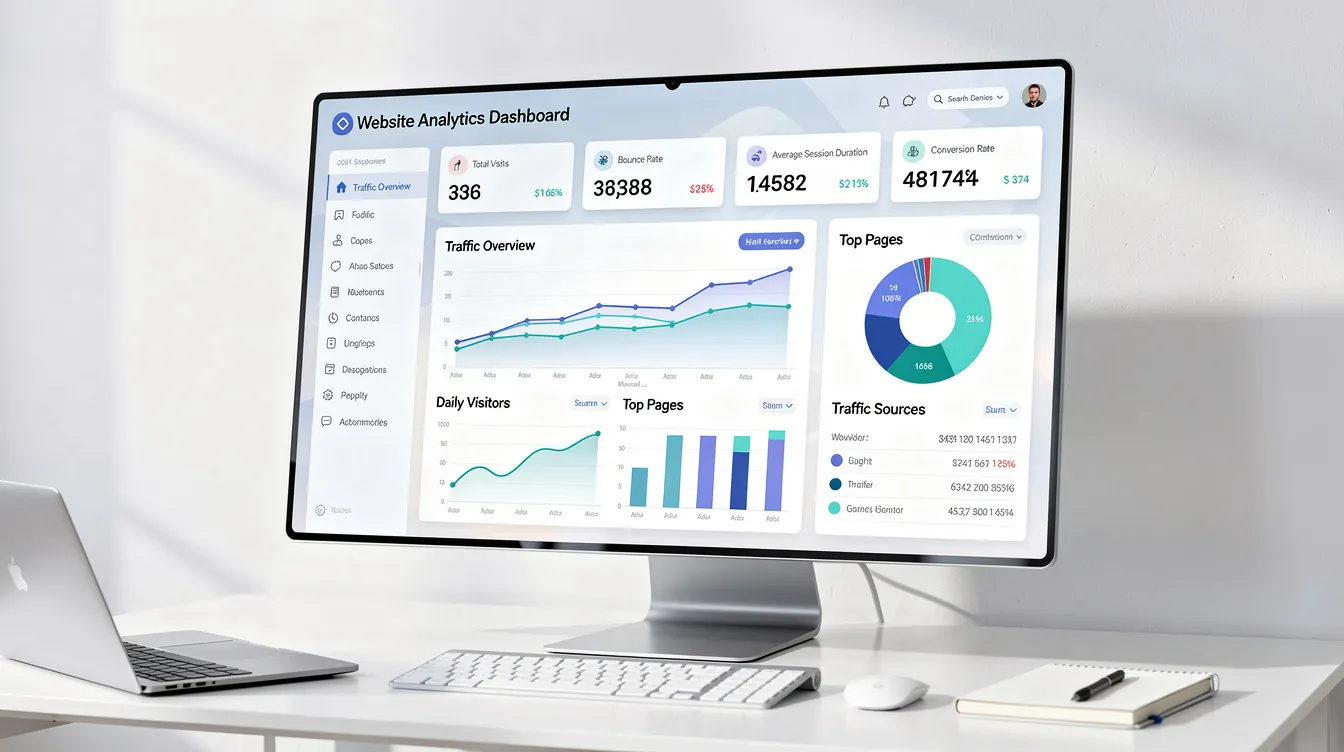
It's vital to know how your website is doing. Tools like Google Analytics 4 give deep insights into website traffic and user actions. With Google Analytics 4, small businesses can keep an eye on important metrics like organic traffic and bounce rates.
Google Analytics 4
Google Analytics 4 has cool features like tracking across devices and predictive analytics. This helps small businesses make smart choices for their SEO.
SEMrush Analytics Reports
SEMrush is a top tool for detailed analytics. It offers reports on keyword rankings, backlinks, and technical SEO audits. SEMrush helps small businesses spot areas to improve and see how their SEO efforts are paying off.
Visualization and Reporting Platforms
Platforms like Databox and Looker Studio make complex data easy to understand. They let small businesses create custom dashboards and reports. This makes it simple to track key performance indicators and share findings with others.
Databox for Small Business Dashboards
Databox lets small businesses link various data sources. They can build real-time dashboards to see their SEO performance all in one place.
Looker Studio for Custom Reports
Looker Studio has advanced data visualization tools. It helps small businesses create custom reports. This way, they can dive deeper into their SEO data.
Transition: With robust analytics and reporting in place, let's see how EZPages.Pro can help you implement and manage your SEO strategy for maximum results.
How EZPages.Pro Enhances Your Small Business SEO Strategy
EZPages.Pro offers a wide range of SEO services for small businesses. They understand the digital challenges small businesses face. So, they provide solutions to boost online presence and growth.
Integrated SEO Solutions from EZPages.Pro
EZPages.Pro takes a complete approach to SEO. They make sure every part of a small business's online presence is optimized. This includes:
Website Design with Built-in SEO Best Practices
A good website is key for SEO success. EZPages.Pro designs websites that look great and work well with search engines.
Ongoing SEO Maintenance and Monitoring
SEO is an ongoing process. EZPages.Pro keeps small businesses competitive with continuous SEO services.
Custom SEO Packages for Different Business Needs
Every business is unique. EZPages.Pro offers custom SEO packages to meet different needs.
Local SEO Services for Brick-and-Mortar Businesses
For businesses with a physical location, EZPages.Pro boosts local search visibility. This helps them reach more local customers.
E-commerce SEO Solutions
E-commerce businesses get specialized SEO help from EZPages.Pro. This is to increase online sales.
Case Studies: Small Business SEO Success with EZPages.Pro
EZPages.Pro has helped many small businesses succeed in SEO. Here are some examples:
| Business Type | SEO Strategy | Results |
|---|---|---|
| Brick-and-Mortar | Local SEO | 40% increase in local search visibility |
| E-commerce | E-commerce SEO | 25% boost in online sales |
Measurable Results and ROI
EZPages.Pro aims for clear results and a good return on investment. They focus on measurable success for small businesses.
Testimonials from Satisfied Clients
Our clients have seen real success with EZPages.Pro's SEO services. Don't just take our word for it.
Learn more about how EZPages.Pro can improve your small business SEO. Contact us at info@ezpages.pro.
Transition: Now that you know how EZPages.Pro can support your SEO journey, let's summarize the key points and answer some common questions about SEO tools for small businesses.
Conclusion: Building an Effective SEO Toolkit for Your Small Business
Creating a strong SEO toolkit is key for small businesses to thrive online. We've seen how important small business SEO is for local growth. It helps overcome the challenges small businesses face.
A good SEO plan includes keyword research, on-page SEO, and technical SEO. It also covers local SEO, backlink analysis, and SEO reporting. With the right tools, small businesses can boost their online presence. This leads to more traffic and higher conversions.
From free keyword tools to advanced technical solutions, the right tools help achieve SEO goals. By using these tools, small businesses can stay ahead in the digital world.
Frequently Asked Questions About Essential SEO Tools for Small Businesses
What is the importance of SEO for small businesses?
SEO is crucial for small businesses because it increases online visibility, drives organic traffic, and helps attract potential customers. Effective SEO enables small businesses to compete with larger companies by improving their search engine rankings, building trust, and establishing credibility in their local markets.
How can small businesses improve their local SEO?
Small businesses can improve local SEO by optimizing their Google Business Profile, building consistent local citations, gathering positive customer reviews, and targeting location-specific keywords. Using tools like BrightLocal and Moz Local can help manage local listings and monitor reputation, ensuring the business appears prominently in local search results.
What are the key SEO metrics that small businesses should track?
Important SEO metrics include organic traffic, keyword rankings, click-through rates (CTR), and conversion rates. Tracking these helps businesses understand how well their SEO efforts perform, identify opportunities for improvement, and measure the return on investment from SEO activities.
What is the role of keyword research in small business SEO?
Keyword research helps small businesses identify the search terms their target customers use. This allows them to create relevant content optimized for those keywords, increasing the chances of ranking higher in search results and attracting qualified traffic that is more likely to convert.
How can EZPages.Pro help small businesses with their SEO needs?
EZPages.Pro offers tailored website design, hosting, and ongoing SEO maintenance services that incorporate best practices for search engine optimization. They provide custom SEO packages, including local SEO and e-commerce solutions, to help small businesses improve their online presence, increase traffic, and achieve measurable growth.
What are some effective on-page SEO tools for small businesses?
Popular on-page SEO tools include Yoast SEO and Rank Math for WordPress users, which simplify content optimization and meta tag management. Content optimization platforms like SurferSEO provide data-driven recommendations to improve keyword usage, content length, and structure, enhancing the chances of ranking well.
How can small businesses build high-quality backlinks?
Small businesses can build backlinks by creating valuable, shareable content, engaging in guest blogging, and reaching out to industry influencers or local partners for link-building opportunities. Tools like Ahrefs and SEMrush can help identify backlink prospects and monitor the quality of existing links.
What are the benefits of using SEO reporting and analytics tools?
SEO reporting and analytics tools provide insights into website performance, user behavior, and keyword rankings. They help small businesses track progress, identify technical issues, understand customer journeys, and make data-driven decisions to optimize their SEO strategies effectively.
How can small businesses set realistic SEO goals?
Small businesses should set achievable short-term goals like improving keyword rankings and increasing organic traffic, alongside long-term objectives such as boosting conversion rates and expanding online visibility. Goals should be measurable, time-bound, and aligned with overall business objectives to track ROI accurately.
What is the difference between free and premium SEO tools?
Free SEO tools, such as Google Search Console and Google Analytics, offer essential data for website performance and keyword tracking at no cost, making them ideal for beginners. Premium tools like SEMrush, Ahrefs, and SurferSEO provide more advanced features, including competitor analysis, backlink tracking, and detailed content optimization, which are valuable for businesses with more complex SEO needs or larger budgets.

EzPages.Pro specializes in small business web management and web development for small businesses and startups. Our tailored solutions simplify content updates, track performance with analytics, and ensure smooth site operation. With our all-in-one management services, you can focus on growing your business while we handle the rest.
🚀 Let’s build something great together.
EZPages blog