Refreshing Your Business’s Brand: A Modern Playbook for Relevance and Reach
Brand fatigue happens — even to strong businesses. Markets shift, audiences evolve, and what once felt distinct starts to blur into the noise. A thoughtful brand refresh isn’t about changing who you are; it’s about reintroducing your essence to the world in a way that fits today’s conversations.
Quick Highlights for Fast Readers
- Recognize when your brand’s look or story no longer aligns with audience expectations.
- Start with clarity — know what’s still working before you start changing.
- Update visuals and tone together; one without the other feels hollow.
- Reconnect through storytelling, not slogans.
- Use digital tools and AI-generated visuals to explore creative directions faster.
When to Know It’s Time
A brand refresh doesn’t always announce itself loudly. Sometimes it’s subtle — social posts that don’t land, website visits that stall, or a sense that your competitors “feel” more current. Be sure to ask yourself:
- Does your design or tone feel dated?
- Have your products or mission evolved faster than your brand identity?
- Does your audience instantly recognize your value when they see your content?
If you’re hesitating on any of these, it’s probably time.
Crafting the New Narrative
Refreshing your brand means updating your story as much as your logo. Your narrative should clearly express why you exist now.
Here’s a simple structure to help:
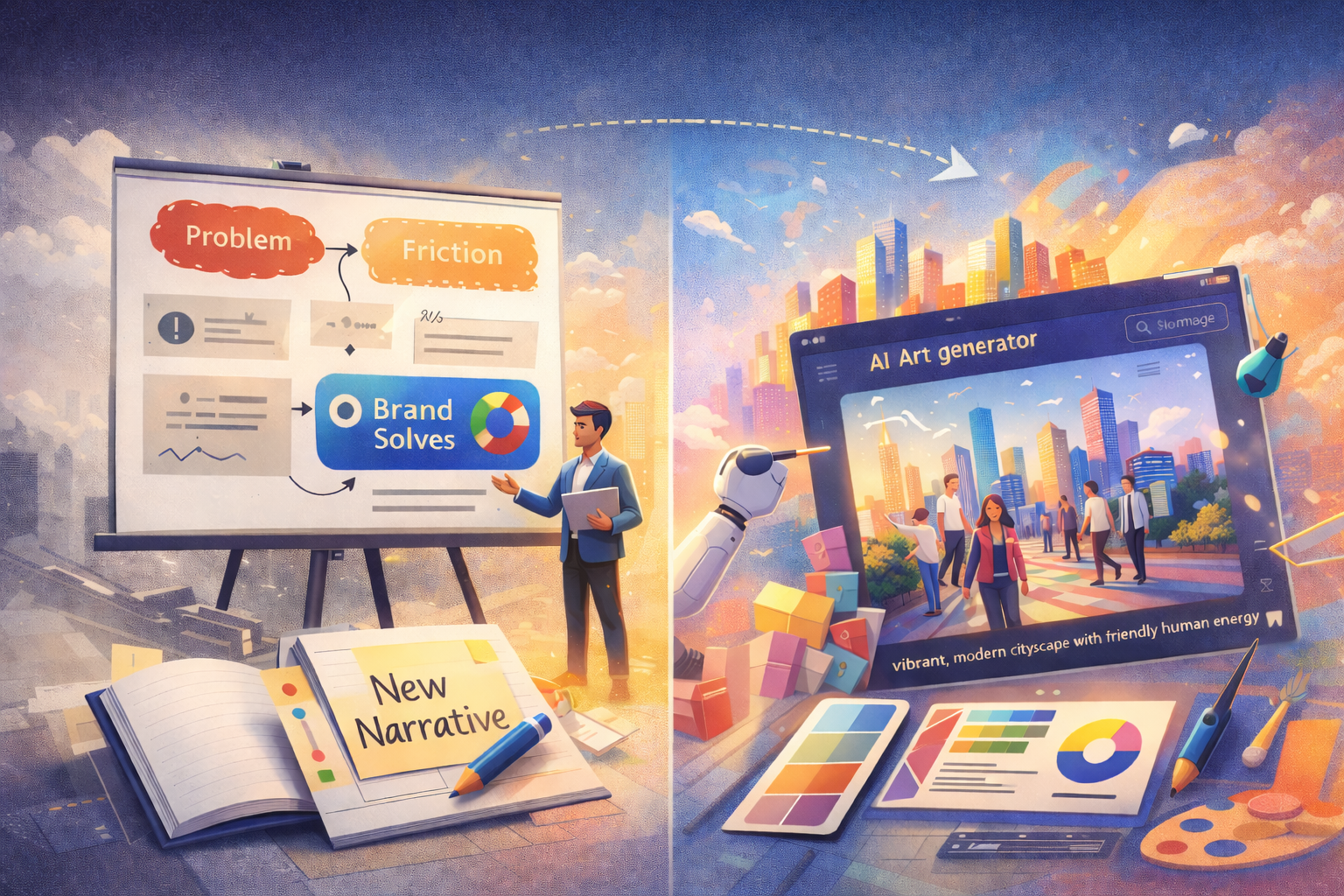
Problem → Friction → Brand Solves
- Start by naming the
problem your audience faces.
- Illustrate the friction that makes that problem hard to solve.
- Show how your brand fits naturally as the resolution.
Example:
“Small teams struggle to keep marketing content on-brand across platforms. Managing templates and approvals takes too much time. [Your Brand] solves this by automating brand consistency for every campaign.”
This structure grounds your messaging in empathy and clarity.
Updating the Visual Language
A logo refresh without strategic thinking is just decoration. Before diving into design, map out your visual tone — how color, typography, and imagery express who you are.
Make sure visuals align with the updated story you tell. Warm palettes might signal approachability; crisp, minimal layouts suggest confidence and focus. The visuals should feel like the narrative made visible.
Using AI to Create New Visual Energy
Modern brand refreshes often include an experimental phase — using tools to imagine what the brand could look like. AI-generated imagery can accelerate that.
By experimenting with AI art tools, brands can quickly explore hundreds of visual directions without heavy upfront design costs. For instance, you can check this out — a text-to-image platform that allows you to describe your idea (“vibrant, modern cityscape with friendly human energy”) and generate original visual samples. It’s an efficient way to explore new design atmospheres before committing to final creative work.
Common Pitfalls to Avoid
Before jumping into any redesign, consider this list of frequent missteps:
- Overcorrection: changing everything and losing hard-earned recognition.
- Copycat syndrome: mimicking category leaders instead of clarifying your difference.
- Inconsistency: updating visuals but leaving
messaging stuck in the past.
- Skipping feedback: failing to test concepts with real users or loyal customers.
A brand refresh is as much about continuity as it is about change.
Step-by-Step Checklist for a Smooth Refresh
Follow these steps to ensure your rebrand maintains clarity and cohesion:
- Audit your current assets. Identify what still resonates.
- Redefine your core message. What do you want people to remember about you?
- Update your visual system. Fonts, color, logo, and imagery must feel unified.
- Refresh your tone of voice. Adjust the language to match today’s audience mindset.
- Implement consistently. Roll out changes across all platforms, from your site to your social handles.
Communicate the change. Tell your audience why you refreshed — invite them into the story.
Measuring Impact
To understand whether the refresh worked, track performance across these metrics:
| Metric | Why It Matters | What to Look For |
|---|---|---|
| Engagement rates | Shows audience resonance | Higher click-throughs, more comments |
| Brand recall | Indicates memorability | Post-campaign surveys, aided recall studies |
| Customer retention | Tests emotional loyalty | Reduced churn or stronger repeat business |
| Earned mentions | Signals relevance | Increased unlinked brand mentions or citations |
Frequently Asked Questions about Refreshing Your Business’s Brand: A Modern Playbook for Relevance and Reach
Before wrapping up, here are answers to common brand-refresh questions:
How often should a business refresh its brand?
Every 5–7 years is common, but it depends on how fast your market evolves. Sometimes, smaller micro-refreshes — like tone or typography updates — can maintain momentum between major overhauls.
What’s the difference between a rebrand and a brand refresh?
A rebrand changes your identity completely (name, positioning, audience). A refresh modernizes what already works without discarding your equity.
Should we change our logo?
Not necessarily. Update your story first — the visual identity should follow, not lead, the change in strategy.
Final Thoughts
A brand refresh isn’t just a creative exercise — it’s a strategic reset. When done well, it renews trust, relevance, and internal energy. The process clarifies not just how you look, but why you matter.
So, take your time. Audit deeply. Communicate honestly. Then let your refreshed brand tell the story you’ve been growing into all along.

EzPages.Pro specializes in small business web management and web development for small businesses and startups. Our tailored solutions simplify content updates, track performance with analytics, and ensure smooth site operation. With our all-in-one management services, you can focus on growing your business while we handle the rest.
🚀 Let’s build something great together.
EZPages blog