Mastering Small Business Web Management: Best Practices
In today's digital world, small business owners, managers, and web administrators face unique challenges and opportunities when it comes to building and maintaining a successful online presence. Small business web management is essential for attracting and retaining customers in today's digital world. Whether you are launching your first website or looking to optimize an existing one, mastering web management matters for small businesses because it enables you to compete online, attract new customers, and ensure your site remains secure and trustworthy.
This article is designed specifically for small business professionals seeking actionable guidance on best practices, strategies, and tools for small business web management. We’ll cover everything you need to know to build, maintain, and grow your website, from content and security to performance, SEO, analytics, and integration with business operations. Effective website management involves continuous planning, optimization, and monitoring to ensure that the site meets user expectations and business goals.
Read on for actionable strategies and best practices for small business web management, including content management, website security, performance optimization, SEO, analytics, and integration with your business operations.
KEY TAKEAWAYS
- Effective web management is crucial for small businesses.
- A well-designed website attracts and retains customers.
- EZPages.Pro offers comprehensive website management services.
- Tailored solutions help businesses grow and succeed online.
Improved online visibility is key to reaching the target audience.
THE CRITICAL ROLE OF WEB MANAGEMENT FOR SMALL BUSINESS SUCCESS
Web management is key for small businesses to grow and stay strong. Effective website management involves continuous planning, optimization, and monitoring to ensure that the site meets user expectations and business goals. In today’s digital world, some business owners assume running a site is a simple task, but effective management requires consistent attention. It helps build a strong digital presence and drives success.
Why Ongoing Management Matters
Good web management is vital for small business web design services. It affects how customers see and interact with a business online, and effective management supports an effective online presence. A user-friendly, mobile-responsive website with fresh content boosts engagement and sales.
Building Trust and Credibility
It also makes a business look credible and trustworthy while strengthening customer trust. This leads to more loyal customers and better retention.
Maintaining Technical Health
Ignoring website upkeep can cost small businesses a lot. A neglected website often develops technical issues, which can lead to lost sales, harm reputation, create costly mistakes over time, and drop in search rankings. It also risks cyber threats and data breaches.
Investing in web development for small businesses is more than just creating a site. It’s about keeping and improving it for lasting success.
Setting the Foundation for Online Success
To succeed online, small businesses need a strong foundation. This means designing a website that looks good and works well. It should also be easy to find and use.
By doing this, small businesses can get more visibility, attract more customers, and grow their business.
With an understanding of why web management matters, let's explore the core principles and strategies that drive ongoing success.
SMALL BUSINESS WEB MANAGEMENT: CORE PRINCIPLES AND STRATEGIES
In today’s digital world, small businesses must focus on web management to stay ahead. Effective website management involves continuous planning, optimization, and monitoring to ensure that the site meets user expectations and business goals. It’s not just about keeping a website up—ongoing website management is a continuous process that keeps it secure, effective, and aligned with your goals. It’s about building a strong online presence, because proper management is what turns a website into a growth asset for your business.
Key Components of a Comprehensive Web Management Plan
A good web management plan has several key components. These include regular website maintenance, ongoing maintenance, website updates, updating content, security steps, and improving performance. By adding these, small businesses can keep their website current and effective.
Keeping your site updated is a key part of basic website maintenance. It means fixing broken links, updating plugins, and making sure it works on all devices. This ensures a good user experience and is vital for small business website management solutions.
Establishing Clear Goals and KPIs for Your Website
To manage a website well, small businesses need clear goals and KPIs. Goals might be to get more website visitors or increase online sales. By setting measurable KPIs, businesses can see how they're doing and make smart choices.
For example, if you want to sell more online, track things like conversion rates and average order value. Watching these KPIs helps you see if your web management is working and makes it easier to make changes.
Balancing DIY Management vs. Professional Services
Small businesses often wonder if they should manage their website themselves or hire pros. Doing it yourself can save money, but it can also consume valuable time and requires a lot of knowledge. Professional web services, on the other hand, bring specialized skills that help ensure the website is managed properly and can be more effective over time.
When to Handle Web Tasks In-House
Doing web tasks yourself is good if you have the right skills and resources. It lets you have more control over your website and can be cheaper for a simple task or two when your team has capacity, though small business owners often keep this work in-house only when they already have the needed skills.
When to Outsource to Experts
It’s best to hire experts for complex tasks like security, advanced SEO, fixing technical issues, or big website changes. They have the knowledge to handle these tasks well, keeping your website safe and running smoothly and making support more stress free for business owners.
Understanding web management basics helps small businesses make smart choices for their online presence. Whether you do it yourself or hire pros, effective web management is crucial for online success.
Now that you know the core principles and strategies, let's dive into content management techniques that keep your website fresh and engaging.
ESSENTIAL CONTENT MANAGEMENT STRATEGIES FOR SMALL BUSINESSES
Content management is key for small businesses wanting to boost their online presence. It's not just about posting on a website. It's about making a site that's lively and interesting for visitors.
Creating a Sustainable Content Update Schedule
Keeping your website fresh and relevant is vital. This means regular updates, like blog content, blog posts, or news. Staying consistent helps keep visitors interested and boosts your search engine ranking when combined with the right mix of SEO tools and strategies for small businesses. Even a blog post should be reviewed and refreshed over time so it does not become outdated. For example, a small business might aim for weekly blog posts or monthly newsletters.
Best Practices for Maintaining Content Freshness and Relevance
Keeping content up-to-date with ongoing updates is important. It makes sure your site stays relevant and accurate. This improves user experience and helps with SEO. Regular audits and updates are a good way to do this, and fresh content also supports search engine optimization.
“Regularly updating your content is like giving your website a breath of fresh air. It keeps your audience engaged and coming back for more.” - Content Marketing Expert
Content Management Systems That Simplify Updates
A Content Management System (CMS) makes updating your site easier. Choosing the right CMS lets non-technical staff make changes without needing to know a lot of tech, especially when it includes fast, secure, fully managed website building features.
User-Friendly CMS Options for Non-Technical Users
Platforms like WordPress and Joomla are easy to use. They have simple interfaces and lots of templates and plugins to help your site.
Training Staff for Basic Content Updates
Even with a simple CMS, training staff is crucial. This training should cover how to create content, use the CMS, handle page layouts, and keep the site consistent.
By using these strategies, small businesses can enhance their online presence. They can better engage their audience and support their business goals.
Next, let's look at how to keep your website secure and protect your business from online threats.
WEBSITE SECURITY MEASURES EVERY SMALL BUSINESS SHOULD IMPLEMENT
As small businesses grow online, strong website security is key. A secure site keeps customer data safe and protects the business's good name. It also keeps customers trusting the business.
Common Security Threats Targeting Small Business Websites
Small businesses face many security risks. These include malware, phishing, and DDoS attacks, and many attacks exploit known security vulnerabilities in outdated software. These threats can cause big financial losses and harm the business’s online image.
- Malware and ransomware attacks
- Phishing and social engineering tactics
- DDoS attacks and website downtime
Implementing Robust Security Protocols and Safeguards
To fight these threats, small businesses need strong security steps backed by clear website management policies and protections. These include:
- Using HTTPS and SSL certificates to encrypt data
- Regularly updating software and plugins to apply security patches and prevent vulnerabilities
- Implementing strong password policies and multi-factor authentication
Regular Security Audits and Monitoring Practices
Regular security checks and watching for threats are vital. This helps find weak spots and deal with threats fast. It includes:
Essential Security Plugins and Tools
- Security plugins for Content Management Systems (CMS)
- Intrusion Detection Systems (IDS) and Intrusion Prevention Systems (IPS)
- Web Application Firewalls (WAF)
- Uptime monitoring as part of regular security and reliability oversight
Backup Strategies for Data Protection
Having a solid backup plan is crucial for keeping the business running if something goes wrong. This means using automated backups, keeping them safe, and checking if you can restore them.
By focusing on website security and using these steps, small businesses can lower the chance of security problems. This helps keep their online presence safe.
With your website secure, it's time to focus on optimizing performance for a better user experience and higher search rankings.
PERFORMANCE OPTIMIZATION TECHNIQUES FOR SMALL BUSINESS WEBSITES
In today's digital world, small businesses need to focus on making their websites fast and responsive. A quick website improves user experience and boosts search engine rankings. This means more visitors and potential customers for your site.
Page Speed Optimization
Page speed and load speed are key for a good website. Slow load times can cause people to leave quickly and frustrate users, missing out on chances. Partnering with experts in high-performance, secure custom website design can help address many of these issues. To make your site faster:
- Reduce the number of elements on your page to cut down on HTTP requests.
- Use compression to make files smaller.
- Use browser caching to store resources locally.
Mobile Responsiveness
Most people use mobile devices to access websites, so mobile optimization should be a priority, not just mobile responsiveness. So, it’s important to make sure your site works well on mobile, since mobile users expect a smooth experience on phones and tablets and search engines reward mobile-friendly, SEO-optimized websites. This means:
- Using a responsive design that changes with screen size.
- Optimizing images and media for mobile networks.
- Making navigation easy on smaller screens. Using intuitive navigation improves user experience on a website.
Server Performance
Server performance is crucial for a fast website. The right hosting plan and server settings can make a big difference.
Image and Resource Optimization
Optimizing images and resources is key for faster page loads. This includes compressing images, image optimization, choosing efficient file formats like WebP, and using lazy loading.
Caching and Performance Testing
Caching can make your site load much faster by reducing resource reloads. Regular performance testing and ongoing performance monitoring find areas for improvement, keeping your site running smoothly.
By using these optimization techniques, small businesses can improve their website’s performance. This leads to better user experience, higher search engine rankings, and a stronger online presence.
Next, let's explore how SEO management can further boost your website's visibility and attract more customers.
SEO MANAGEMENT FOR IMPROVED SMALL BUSINESS VISIBILITY
In today’s digital world, small businesses need to focus on SEO management to get noticed online. Good SEO, or search engine optimization, can boost a business’s ranking on search engines. This helps increase organic traffic to their website without paying for ads.
On-Page SEO Best Practices
For local businesses, on-page SEO is key. It helps search engines see how relevant and useful a website is. Best practices include making meta tags better, using header tags, and adding local keywords in content.
Local SEO Strategies
Local SEO helps businesses show up in searches for nearby things. This means claiming and optimizing Google My Business listings, getting local mentions, and making content for the local crowd to attract qualified traffic from nearby searchers who are more likely to convert.
Monitoring and Improving Rankings
SEO is an ongoing effort. Small businesses should keep an eye on their rankings, check out what competitors are doing, and tweak their SEO plans as needed.
Keyword Research
Keyword research is the base of a good SEO plan. It's about finding the right keywords and phrases that people use to find what they need online.
Building Quality Backlinks
Getting quality backlinks is key to better search rankings. Small businesses can do this by making high-quality, shareable content and getting involved in local events that lead people to their site, as well as using integrated apps that enhance website functionality and engagement.
By using these SEO strategies, small businesses can get more online visibility, draw in more customers, and grow their business. Keeping an eye on and tweaking their SEO plans helps them stay ahead in the digital world.
Now, let's see how analytics and data-driven decision making can help you continually improve your website.
ANALYTICS AND DATA-DRIVEN DECISION MAKING FOR WEBSITE IMPROVEMENT
To make smart choices about your website, you need to look closely at analytics and performance data. In small business web management, knowing how users interact with your site is key to making it better.
Essential Metrics Every Small Business Should Track
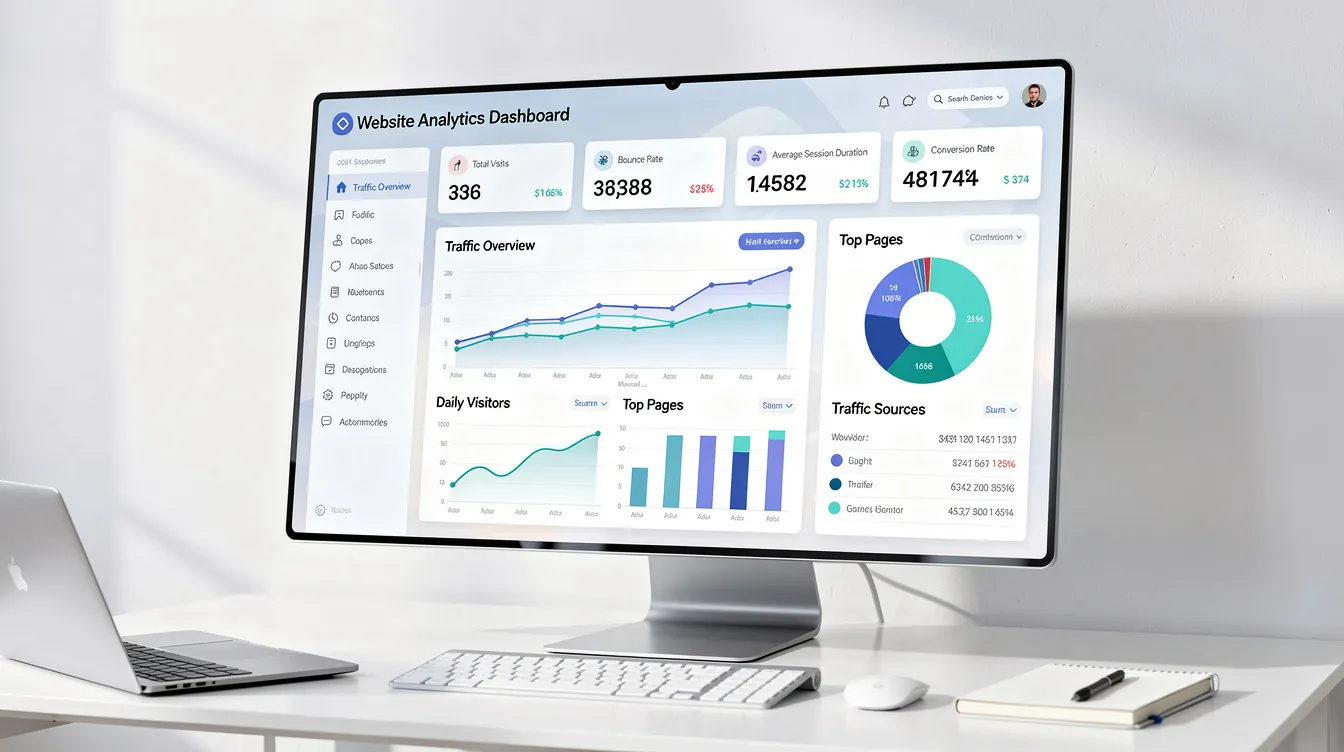
It’s vital to watch key performance indicators (KPIs) to see if your website is doing well. Look at website traffic, bounce rates, how long visitors stay, and conversion rates. These metrics help small businesses spot where they can get better and make smart choices.
| Metric | Description | Importance |
|---|---|---|
| Website Traffic | Total number of visitors to your site | Shows how visible and reachable your site is |
| Bounce Rate | Percentage of visitors who leave without interacting | Tells you if your content is relevant and engaging |
| Conversion Rate | Percentage of visitors who complete a desired action | Shows how well your site meets your business goals |
| Website analytics should also track traffic sources so businesses know where visitors come from. |
Setting Up Effective Analytics and Tracking Systems
To track these important metrics, small businesses need to set up good website analytics and tracking systems, ideally built into a top website builder for small businesses. Here’s how:
- Install analytics tools such as Google Analytics on your website.
- Add tracking codes to all pages you want to monitor.
- Set up goals and conversion tracking to measure key actions (like form submissions or purchases).
- Regularly review analytics reports to identify trends and areas for improvement.
Translating Website Data into Actionable Business Improvements
After getting website data, the next step is to use it to make your business better. This means looking at user behavior reports and conversion tracking data to find trends and chances to improve.
Understanding User Behavior Reports
User behavior reports show visitor behavior and how visitors interact with your site, including which pages they visit and how long they stay. By understanding these patterns, businesses can make their site’s layout, content, and calls-to-action better match what users need and refine page structure based on those insights.
Conversion Tracking and Optimization
Conversion tracking lets businesses see if their site is helping them reach their goals, like getting form submissions or sales. By improving things that affect conversions, like landing pages and CTAs, businesses can make their site work better and get more value from it.
With analytics in place, the next step is to integrate your website with your broader business operations for even greater efficiency.
INTEGRATING YOUR WEBSITE WITH BUSINESS OPERATIONS
In today's digital world, linking your website with your business is key for success. This connection helps streamline processes, boost customer interaction, and drive growth.
Connecting Your Website to CRM and Marketing Tools
Connecting your website to CRM and marketing tools is vital. It lets you track customer interactions and tailor marketing efforts, especially when you leverage integrated apps to extend your website’s functionality as part of managed website services that centralize upkeep and optimization. By linking your website with CRM systems, you can:
- Enhance customer data management
- Improve lead generation and nurturing
- Streamline sales and marketing processes
Streamlining Customer Interactions Through Your Website
Effective website integration also means making customer interactions smoother. Use intuitive navigation, clear calls-to-action, and responsive design. This makes your website easier to use, boosting user experience and sales.
Automation Opportunities That Save Time and Resources
Automation is a big plus of website integration. It automates routine tasks, saving time and resources. This lets you focus on strategic goals.
Payment Processing and E-commerce Integration
Adding payment processing and e-commerce to your website boosts customer experience. It lets customers buy or pay directly on your site, and for businesses selling online, an e commerce store is a core setup that makes checkout easier and can increase sales, especially when supported by affordable, fully managed website plans for small businesses.
Appointment Scheduling and Customer Service Tools
Adding appointment scheduling and customer service tools to your website also helps. It lets customers book appointments or get help directly, improving satisfaction.
By integrating your website with your business, you create a more unified and efficient model. It not only improves internal processes but also enhances the customer experience. This leads to long-term success.
Now, let's see how partnering with a professional service like EZPages.Pro can elevate your web management efforts.
HOW EZPAGES.PRO ELEVATES SMALL BUSINESS WEB MANAGEMENT
With EZPages.Pro, small businesses can boost their web management with support for ongoing improvements. This leads to growth and better customer interaction for small businesses and medium sized businesses. They make sure websites look good and work well, keeping them safe.
Comprehensive Web Management Services Overview
EZPages.Pro offers a wide range of web management services as an ongoing investment in content, security, performance, and analytics. This makes it easy for businesses to manage their websites.
Tailored Solutions for Different Business Needs and Industries
EZPages.Pro knows every business is different. They tailor their services to fit each business's needs. Whether it's a local store or a service business, they help achieve goals with customized web management strategies.
Client Success Stories and Measurable Results
EZPages.Pro has helped many small businesses succeed online. Here are some practical examples of results that made those gains more concrete. They’ve seen better website performance and more customer engagement. This has boosted their profits. Key services include:
Content Management and Update Services
Keeping a website fresh is important. EZPages.Pro makes it easy to update content and keep an existing site current, supporting maintenance over time. This keeps websites relevant and engaging.
Security and Performance Optimization Offerings
EZPages.Pro focuses on website security and speed. They protect against threats and make websites load faster. This improves user experience and search rankings.
Analytics and Reporting Features
EZPages.Pro offers detailed analytics and reports. This helps businesses understand their website's performance. They can see what works and what needs improvement.
Partnering with EZPages.Pro can change a business's website into a growth tool. With their web management skills, businesses can focus on their core activities. They know their online presence is well taken care of.
As you consider your next steps, let's recap how you can take your small business website to the next level.
CONCLUSION: TAKING YOUR SMALL BUSINESS WEBSITE TO THE NEXT LEVEL
Effective small business web management is key for growth in today's digital world. By using the strategies from this article, small businesses can boost their online presence. This improves their digital marketing efforts.
Working with a trusted web management service like EZPages.Pro can help small businesses reach their online goals. EZPages.Pro offers complete web management services. They focus on helping businesses succeed online.
By applying the insights and best practices from this article, small businesses can elevate their website. They can increase their online visibility and drive growth through effective web management.
Frequently Asked Questions About Mastering Small Business Web Management
WHAT IS THE IMPORTANCE OF EFFECTIVE WEB MANAGEMENT FOR SMALL BUSINESSES?
Effective web management ensures that a small business website remains fast, secure, and user-friendly. It helps build trust with customers, improves search engine rankings, and supports business growth by keeping content fresh and the site functioning smoothly. Without proper management, websites risk losing visitors, damaging reputation, and missing out on potential sales.
HOW CAN SMALL BUSINESSES BENEFIT FROM COMPREHENSIVE WEB MANAGEMENT SERVICES?
Comprehensive web management services provide expert support in content updates, security enhancements, performance optimization, SEO, and analytics. These services save business owners time and reduce technical headaches while ensuring the website aligns with business goals. This leads to increased online visibility, better user experience, and measurable growth.
WHAT ARE THE CONSEQUENCES OF NEGLECTING WEBSITE MAINTENANCE?
Neglecting website maintenance can result in slow load times, broken links, outdated content, security vulnerabilities, and poor user experience. This can cause loss of customer trust, lower search rankings, increased risk of cyberattacks, and ultimately, lost revenue.
HOW CAN SMALL BUSINESSES CREATE A SUSTAINABLE CONTENT UPDATE SCHEDULE?
Small businesses should set realistic goals for content updates, such as publishing blog posts monthly or refreshing key pages quarterly. Consistency is more important than frequency. Using a content calendar and leveraging a user-friendly CMS can help streamline the process and keep the website relevant and engaging.
WHAT ARE SOME COMMON SECURITY THREATS TARGETING SMALL BUSINESS WEBSITES?
Common threats include malware infections, phishing attacks, ransomware, DDoS attacks, and exploitation of outdated software vulnerabilities. Small businesses are frequent targets due to often limited security resources, making robust protection essential.
HOW CAN SMALL BUSINESSES OPTIMIZE THEIR WEBSITE PERFORMANCE?
Optimizing website performance involves improving page load speeds by compressing images and files, enabling caching, minimizing HTTP requests, and choosing reliable hosting. Mobile responsiveness and regular performance monitoring also ensure a smooth user experience across devices.
WHAT ARE SOME ON-PAGE SEO BEST PRACTICES FOR LOCAL BUSINESSES?
Best practices include optimizing meta titles and descriptions with local keywords, using header tags effectively, creating location-specific content, claiming and managing Google My Business listings, and ensuring the website has an active SSL certificate for security and ranking benefits.
HOW CAN SMALL BUSINESSES USE ANALYTICS TO INFORM THEIR DECISION MAKING?
By tracking metrics like website traffic, bounce rates, and conversion rates through tools like Google Analytics, businesses can understand visitor behavior, identify popular content, and spot areas needing improvement. This data-driven approach helps refine marketing strategies and improve user experience.
WHAT ARE THE BENEFITS OF INTEGRATING A WEBSITE WITH BUSINESS OPERATIONS?
Integration with CRM, marketing automation, payment processing, and customer service tools streamlines workflows, enhances customer interactions, and provides unified data. This leads to improved lead management, personalized marketing, and a more seamless customer experience.
HOW CAN EZPAGES.PRO HELP SMALL BUSINESSES WITH THEIR WEB MANAGEMENT NEEDS?
EZPages.Pro offers tailored web management services including content updates, security monitoring, performance optimization, SEO support, and detailed analytics reporting. Their expertise allows small businesses to maintain a polished, secure, and effective website that supports growth while freeing owners to focus on core business activities.

EzPages.Pro specializes in small business web management and web development for small businesses and startups. Our tailored solutions simplify content updates, track performance with analytics, and ensure smooth site operation. With our all-in-one management services, you can focus on growing your business while we handle the rest.
🚀 Let’s build something great together.
EZPages blog