The Need for Web Analytics: Why Every Modern Website Depends on Data
In 2026, no serious business website can grow sustainably without web analytics. Whether you're tracking leads from a March campaign or attributing sales to a specific email blast, data is what separates thriving sites from stagnant ones.
Key Takeaways
- Web analytics transforms raw data into actionable insights for businesses, turning your website from a digital brochure into a measurable sales engine.
- Understanding user behavior, improving conversion rates, optimizing traffic sources, and aligning website performance with business goals are the core reasons web analytics is essential today.
- Tools like Google Analytics 4, Search Console, and other web analytics tools turn website data into decisions that directly impact revenue, leads, and customer experience.
- Even small businesses can compete with larger brands by leveraging web analytics to make data driven decisions rather than relying on guesswork.
- EZPages.Pro sets up and manages analytics tracking for clients as part of every website build, so you never have to touch code or wrestle with dashboards yourself.
What Is Web Analytics and Why It Matters in 2026
Web analytics is the practice of collecting, measuring, and analyzing website data - visits, traffic sources, user interactions, conversion rates - to improve performance and achieve business goals. Web analytics tracks user behavior on websites and apps, giving you a clear picture of how visitors move through your pages and where they convert or leave.
It goes well beyond counting page views. Modern web analytics captures customer behavior, engagement metrics across devices, scroll depth, click patterns, and even predictive signals like churn risk. Web analytics tools collect data using JavaScript code snippets embedded on your site, sending information back to platforms like Google Analytics 4 for analysis.
Since Universal Analytics stopped processing new data in July 2023, GA4 became the default google analytics property. This shift matters because GA4 uses an event-based model instead of session-based tracking, which means businesses reviewing historical data in 2024–2026 need to understand the new structure.
For digital marketing, web analytics connects every campaign - SEO, paid search, email, social - to outcomes like leads, appointments, or sales. EZPages.Pro configures this tracking during every site build on the Duda platform, including Google Analytics and Search Console integration, so small businesses get immediate visibility into their website data from day one.

The Business Case: How Web Analytics Supports Core Goals
Web analytics ties directly to the priorities that keep business owners up at night: revenue growth, lead generation, and cost control. Web analytics helps optimize marketing campaigns and improve customer experience - two things every startup and small business needs to get right.
Consider three common goals and how analytics tools measure each:
- More qualified leads: Track form submissions, consultation bookings, and demo requests as events in GA4. See which pages and channels generate the most leads.
- Higher online sales: Monitor ecommerce conversion rates, average order value, and cart abandonment to find revenue gaps.
- Better customer retention: Measure returning visitor rates, pages per session, and engagement to understand loyalty signals.
Here's a concrete example: a local plumbing company applies essential SEO strategies for startups and tracks how many quote form submissions came from organic search versus paid ads in Q1 2026. The data shows organic drives 40% more leads at zero ad spend - a clear signal to invest more in SEO content.
Setting up clear key performance indicators (like consultation bookings or newsletter sign-ups) and mapping them in web analytics tools turns a generic site into a measurable sales asset. EZPages.Pro helps clients define these KPIs during discovery and translates them into trackable events and goals on their Duda-powered sites, so nothing important goes unmeasured. If you're a startup looking for more than a basic website, this kind of analytics foundation is what separates you from competitors guessing their way through growth.
From Guesswork to Evidence: Understanding User Behavior
Without web analytics, teams rely on opinions about design and content. With it, they see exactly how real users interact with the site. Web analytics enables data-driven decision-making instead of guesswork, and that shift changes everything.
The core user behavior signals worth tracking include:
- Pages per session (how deeply users navigate your site)
- Scroll depth on key pages like pricing or services
- Click patterns on CTAs and navigation elements
- Time spent on high-intent pages like contact or checkout
- Navigation paths showing how users navigate between sections
Analyzing user behavior reveals where people get stuck. Identifying friction points enhances the customer journey - for example, if you see users drop off between your "Services" page and "Contact" page, that gap might signal a missing CTA, unclear pricing, or a confusing layout. Understanding user behavior can improve marketing campaign effectiveness by showing you which messages resonate and which fall flat.
A well-known SaaS example illustrates this: analytics showed 60% of users dropped off during one screen of a signup flow. Simplifying that screen improved conversions by roughly 30% - without spending a dollar on additional traffic. Understanding user behavior increases website performance and engagement in exactly this kind of way.
EZPages.Pro routinely reviews engagement metrics after launch and suggests data-backed layout tweaks for clients as part of ongoing management plans.
Key Web Analytics Metrics That Actually Matter
Not every metric is equally valuable. The need of web analytics becomes clear when you focus on metrics tied to outcomes rather than vanity numbers. Here's how to think about the key metrics that move the needle:
Traffic metrics tell you who's arriving:
- New users are unique visitors visiting a site for the first time.
- Sessions and unique visitors show overall reach.
- Traffic sources reveal whether visitors come from search engines, social, email, or direct traffic.
Engagement metrics reveal what visitors do:
- Bounce rate measures users leaving after viewing only one page. A high bounce rate indicates potential issues with user engagement.
- Average session duration shows how long users stay on a website.
- Pages per session measures the average number of pages viewed by users.
Conversion metrics connect activity to results:
- Conversion rate indicates the percentage of visitors completing desired actions, like submitting a form or making a purchase.
- Tracking conversion rates reveals how effectively content drives actions.
- Goal completions and ecommerce revenue tie directly to business objectives.
Web analytics monitors key performance indicators like pageviews and session duration, but the real power is in combining these web analytics metrics. High traffic paired with low engagement typically signals a content or UX problem. Low traffic with a high conversion rate reveals an acquisition opportunity - you just need more of the right visitors.
For example, a lead-gen homepage with strong traffic but a 78% bounce rate suggests messaging mismatch. Meanwhile, tracking form completion rate as a primary KPI tells you whether your page persuades visitors to take the desired action.
EZPages.Pro configures standard dashboards for these metrics in Google Analytics and educates clients on reading them during monthly or quarterly review calls, so you can monitor key metrics without becoming a data scientist.
Popular Web Analytics Tools and When to Use Them
There are many web analytics tools on the market, and businesses should choose based on their stage, budget, and complexity. The web analytics market is projected to reach $16.36 billion by 2030, reflecting how central these tools have become.
Google Analytics 4 is the default choice for most small businesses. It's free, robust, and deeply integrated with Google Ads and Search Console. Google Analytics is a standard tool for tracking website data, with key features like event-based tracking, predictive audiences, and traffic source analysis. Most analytics tools in this category are session-focused, but GA4's event model offers greater flexibility for tracking micro-conversions.
Among other popular web analytics tools:
- Adobe Analytics focuses on deep analysis of customer journeys, making it ideal for large enterprises needing advanced segmentation and custom data modeling.
- Matomo serves privacy-focused organizations with self-hosted options.
- Hotjar and Microsoft Clarity provide behavior analytics - heatmaps and session recordings - for understanding how users interact with specific web pages.
Before committing, evaluate multiple web analytics tools to find the best fit. Check G2 ratings for user feedback on analytics tools, ensure your analytics tool integrates well with existing technologies, and request a demo to understand the features of analytics platforms. Choose tools that provide actionable insights for your business goals rather than drowning you in reporting data.
EZPages.Pro primarily sets up Google Analytics and Search Console on Duda sites but can integrate additional analytics tools where clients need deeper behavior tracking. The tool matters less than the discipline of checking data regularly and aligning reports with business objectives.
Connecting Traffic Sources to Outcomes
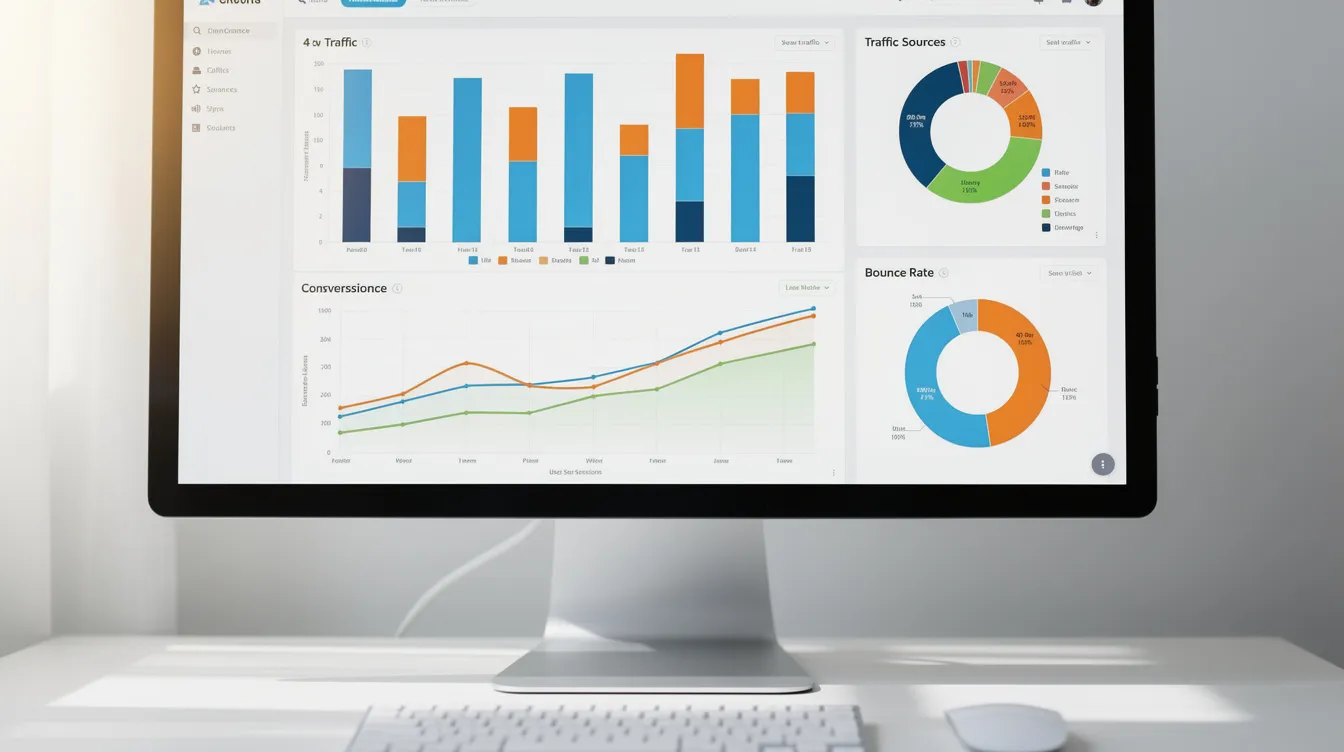
Web analytics is crucial for understanding which traffic sources actually produce leads and sales - not just visits. Web analytics measures the effectiveness of marketing channels by connecting visitor origins to real outcomes.
UTM parameters and built-in traffic source reports in analytics tools like Google Analytics make it possible to attribute conversions to specific marketing campaigns and marketing channels. Web analytics identifies traffic sources that drive conversions, and web analytics helps identify traffic sources driving visitors so you can see exactly which marketing efforts pay off.
Consider this scenario: a startup compares March 2026 traffic from Google Ads versus Instagram campaigns. Instagram brings 3x more website visitors, but Google Ads delivers a 4.2% conversion rate compared to Instagram's 0.9% - and at a lower cost per lead. Web analytics provides insights into traffic sources and user demographics, making this comparison possible within minutes rather than requiring weeks of manual reporting.
For small businesses, this kind of insight supports reallocating budget, pausing underperforming campaigns, and investing more in data-driven SEO optimization services or high-performing ads. Whether the traffic is direct traffic, organic, or referral, web analytics data tells you where to double down.
EZPages.Pro configures acquisition and campaign tracking during launch and helps clients interpret traffic source reports so they see exactly where new customers originate.
Improving Conversion Rates with Web Analytics
Conversion rate optimization is often less expensive than buying more website traffic. Web analytics helps increase conversion rates by optimizing user experience - fixing what's already on your site before spending more on ads.
Funnel analysis in web analytics tracks users step-by-step - from landing page to product page to checkout - revealing where users drop off. Conversion rate measures the percentage of visitors taking desired actions, and watching where that rate drops across funnel stages pinpoints exactly what needs fixing.
Practical examples:
- A consulting firm discovers that 45% of visitors abandon a five-step booking flow at step three. Reducing it to three steps lifts completed bookings by 22%.
- A local clinic shortens its contact form from eight fields to four and sees form submissions increase by 35%.
A/B testing in web analytics compares different versions of a webpage - altering headlines, button copy, or hero images - and measuring which version drives more conversions. Even on small sites, running a simple test on a single CTA button can reveal surprising insights.
EZPages.Pro designs high-performance, secure, custom websites on the Duda platform with CRO best practices baked in, then uses ongoing web analytics data to refine layouts, CTAs, and forms for higher conversion rates. The goal is always to make existing traffic work harder before scaling acquisition.
Web Analytics for UX and Performance Optimization
Slow or confusing pages destroy conversions even if the content is excellent. Web analytics helps improve user experience and drive conversions by surfacing exactly where technical issues and design problems hurt performance.
UX-related metrics to watch:
- Page load times (First Contentful Paint, Largest Contentful Paint)
- Core Web Vitals - Google's signals for speed, responsiveness, and visual stability
- Mobile vs. desktop engagement metrics
- Exit rates on key pages like pricing or checkout
- Scroll depth on long-form content
Web analytics identifies areas for website improvement and optimization by highlighting underperforming pages. For instance, a services page with a 72% exit rate and a 4.8-second mobile load time needs attention - that's where improving user experience can lead to higher customer satisfaction. High bounce rates and low average engagement times can signal usability issues that are invisible without data.
As a real-world example, Arken Zoo built a GA4-based data-driven strategy and achieved 20% more revenue without additional budget - partly by identifying and fixing UX bottlenecks their analytics revealed.
EZPages.Pro leverages Duda's fast global infrastructure alongside analytics insights to tune performance - caching, image optimization, and layout refinements - through their high-performance website features and WooRank-powered SEO tools.
Aligning Web Analytics with SEO and Content Strategy
Web analytics and search engine optimization should work together. Website analytics shows which keywords, pages, and topics drive qualified traffic and conversions, informing your content investments.
Using web data effectively means identifying:
- Top-performing blog posts or landing pages that drive both traffic and leads
- Pages with strong traffic but weak conversion rates (opportunity for better CTAs or lead magnets)
- Content that never gets visited (candidates for revision or removal)
Example: a B2B startup sees that an article on "remote onboarding checklists" drives steady organic traffic but almost zero lead capture. Adding a targeted downloadable template and measuring the lift turns an informational page into a lead generator.
User segmentation tailors content based on visitor characteristics - returning visitors might see different CTAs than first-time users. Traffic source and engagement metrics inform editorial calendars, letting you invest in topics and formats that resonate and sunset content that fails to attract or engage. This is what leveraging web analytics for content strategy actually looks like.
EZPages.Pro includes on-page and technical SEO setup plus analytics integration and broader small-business website optimization steps so clients can continually refine their content strategy based on real data generated by their site.

Privacy, Compliance, and the Future of Web Analytics
Privacy regulations are tightening globally, and they directly affect how web analytics work. The EU's EDPB launched coordinated enforcement in 2026 focusing on transparency obligations under GDPR. In the U.S., California's updated CPRA regulations took effect January 1, 2026, covering automated decision-making, audits, and stricter consent mechanisms.
For businesses using analytics, compliance means:
- Implementing cookie consent banners that respect user choices
- Configuring analytics tools with IP anonymization and appropriate data retention controls
- Honoring Global Privacy Control signals, which some jurisdictions now treat as legal opt-outs
- Maintaining transparent privacy policies that clearly explain data processing
The industry is shifting from third-party tracking toward first-party data collection and server-side analytics approaches. Traditional web analytics relied heavily on cookies, but modern web analytics increasingly uses modeled and consented data to fill measurement gaps created by ad blockers and privacy tools.
Businesses should balance insight with respect for user privacy. Trustworthy analytics setups actually improve brand credibility. EZPages.Pro builds Duda sites with GDPR/CCPA-conscious tracking, consent tools, and accessibility practices baked in, supported by clear website policies and disclaimers, reducing compliance risk for global clients across 14+ countries.
Building a Practical Web Analytics Strategy (Not Just Dashboards)
Installing web analytics tools is not enough. Businesses need a simple, repeatable strategy for turning website data into informed decisions. Without a system, even the best analytics setup becomes an expensive decoration.
A lean strategy framework looks like this:
- Define business goals - What does success look like? More leads? Higher average order value? Longer engagement?
- Pick measurable KPIs - Choose 3–5 key performance indicators kpis that tie directly to those goals.
- Configure tracking and dashboards - Set up events, goals, and simple reports in your analytics setup.
- Review data regularly - Weekly for active marketing campaigns, monthly or quarterly for smaller sites.
- Test improvements - Change one element, measure impact, decide whether to keep or revert.
- Repeat - Data driven decisions enhance marketing effectiveness and ROI over time, not overnight.
Set realistic review cadences. Obsessing over daily fluctuations in a low-traffic site leads to bad decisions. Instead, create a short analytics "playbook" for your web analytics team or internal stakeholders: which reports to check, what thresholds signal problems, and who takes action.
EZPages.Pro often acts as the analytics partner for small teams through their managed website service and broader managed website services benefits, handling dashboard setup, periodic reviews, and recommendations so clients can focus on running their business.
How EZPages.Pro Bakes Web Analytics into Every Website
EZPages.Pro treats analytics as a default, not an add-on. Every Duda-based site we build ships with tracking configured and ready to collect data from day one.
Here's what's included in every launch:
- Google Analytics 4 setup with enhanced measurement enabled (scrolls, outbound clicks, site search)
- Google Search Console integration for search engine visibility and indexing insights
- Basic goal/event tracking for form submissions, key button clicks, and CTA interactions
- Privacy-conscious tagging with cookie consent and IP anonymization configured
Sites are typically designed and launched within 2–4 weeks, with many smaller builds or template-based sites going live in as little as 5–7 days. The analytics setup runs in parallel with design and development, so there's no gap in data collection.
Beyond launch, EZPages.Pro provides professional website management services including managed hosting, enterprise-grade security, regular backups, ADA/WCAG compliance, and periodic analytics reviews to suggest UX, SEO, and conversion improvements. This website management service for small business growth means clients get a single point of contact for everything, without juggling multiple vendors.
For agencies, EZPages.Pro also offers white-label Duda services, including analytics-ready templates - ensuring end clients benefit from web analytics without extra technical work.
Common Pitfalls When Using Web Analytics (and How to Avoid Them)
Even with a solid analytics setup, mistakes happen. The most common ones:
- Tracking everything and understanding nothing - Collecting hundreds of events without knowing which ones matter.
- Ignoring data for months - Setting up analytics and never checking it.
- Focusing on vanity metrics - Celebrating pageview counts while ignoring that no one converts.
- Drawing conclusions from tiny samples - Making big changes based on 50 visits.
Context is critical when reading metrics. A high bounce rate indicates users leave after one page - but on a single-page FAQ that fully answers a question, that bounce rate is perfectly healthy. Panicking over it would lead to unnecessary redesigns.
Avoid analysis paralysis by picking a small set of core KPIs linked to business goals and adding only a few supporting traffic metrics around them.
Here's a cautionary example: a company saw a one-week traffic dip and immediately cut spend on a marketing channel that was actually seasonally affected. Two months later, that channel would have rebounded and delivered its best quarter. A longer-term view using analyze data across at least a full business cycle would have prevented the mistake.
Partners like EZPages.Pro help interpret marketing analytics calmly and correctly, translating complex dashboards into clear, prioritized action lists.
Getting Started: A Simple 30-Day Web Analytics Action Plan
You don't need a full-time analyst. Here's a step-by-step plan to get real value from web analytics in 30 days:
Week 1 - Set the Foundation
- Clarify 2–3 business goals (e.g., increase quote requests, reduce bounce rate on homepage)
- Set up GA4 and Search Console if not already configured
- Define basic goals and events (form submissions, CTA clicks)
Week 2 - Collect Baseline Data
- Let data accumulate without making changes
- Review the "Traffic acquisition" report to see where website traffic originates
- Check the "Pages and screens" report to see which web pages get the most engagement
Week 3 - Identify and Fix
- Spot one or two obvious issues (e.g., a page where how many users bounce is abnormally high, or a CTA nobody clicks)
- Make targeted changes - adjust a headline, shorten a form, move a CTA higher
- Document before metrics for comparison
Week 4 - Measure and Plan
- Compare before/after metrics for each change
- Decide on the next experiment based on valuable insights from data
- Set your ongoing review cadence (weekly or monthly)
Document everything. Training your team in data-driven thinking - even informally - combines web analytics with institutional knowledge to create a culture of continuous improvement.
If you lack the time or expertise, hand this plan to EZPages.Pro. They'll execute the analytics setup, monitoring, and optimization as part of their managed website service or one of their affordable website plans for startups and small businesses - so you can focus on serving customers.

Conclusion: Turning Web Analytics into a Competitive Advantage
Web analytics is no longer optional. It is the lens through which businesses see what's working, what's wasting budget, and where website visitors struggle. The real need is not more data but better decisions - connecting engagement metrics, traffic sources, and conversion rates directly to business goals.
With a solid analytics setup and simple review habits, even a small business can compete effectively against larger brands online in 2026 and beyond. Integrating web analytics into your workflow means every marketing decision is backed by evidence, not assumption.
Ready to stop guessing and start growing? EZPages.Pro delivers fast, secure, analytics-ready websites on the Duda platform - with ongoing data-guided optimization and zero vendor juggling. Contact EZPages.Pro today to schedule a consultation, get transparent flat-rate pricing, and launch a site that turns visitor behavior into business growth.
This is paragraph text. Click it or hit the Manage Text button to change the font, color, size, format, and more. To set up site-wide paragraph and title styles, go to Site Theme.
Frequently Asked Questions About Web Analytics and EZPages.Pro
These questions address practical concerns small businesses and agencies frequently raise about getting value from web analytics and working with EZPages.Pro.
Do I really need web analytics if my business is mostly offline?
Yes. Even primarily offline businesses - local shops, clinics, B2B service providers - rely on their website as a discovery and trust-building channel. Web analytics shows how effectively the site drives calls, direction requests, and inquiries.
For example, you can track how many visitors click a "Call Now" button, request directions via an embedded map, or submit a contact form. This visitor behavior data lets you adjust content, refine local SEO, and understand which campaign performance is driving foot traffic. EZPages.Pro routinely sets up these offline-focused conversion events for brick-and-mortar and service-based clients, often using local SEO strategies alongside analytics to maximize results.
How long does it take to see meaningful insights from web analytics?
Basic patterns - like which pages get the most traffic and where user interaction is strongest - often emerge within 2–4 weeks of consistent traffic. Stronger conclusions typically require at least one full business cycle, such as a month or a full quarter, depending on volume.
High-traffic ecommerce sites can test changes and see results in days. Lower-traffic B2B sites may need more time to gather enough data to identify trends with confidence. EZPages.Pro helps clients set realistic expectations and timelines for tests and reports based on their current and projected traffic levels, so no one overreacts to thin data.
What if Google Analytics 4 feels too complex for my team?
GA4 does have a learning curve compared to the old Universal Analytics, especially around its event model and new report structures. But you don't need to master every feature.
Pragmatic approaches include using a curated set of 3–4 key reports, creating simple custom dashboards that show only what matters, or layering simpler summary tools for non-technical stakeholders. EZPages.Pro can configure GA4, build easy-to-read dashboards, and provide brief training sessions so business owners only see the metrics that matter - no raw data overload, no confusion.
How does EZPages.Pro handle analytics when building white-label sites for other agencies?
For white-label Duda projects, EZPages.Pro follows the partner agency's analytics standards. This means integrating their GA4 properties, tracking pixels, and event schemas into each site build - keeping the agency front-and-center to the end client.
This saves the partner agency's team significant setup time and ensures consistency across their client portfolio. EZPages.Pro can also help agencies design reusable analytics-ready templates and documentation if requested, making it easier for them to scale without hiring additional technical staff.
What's the next step if I want EZPages.Pro to manage my website and analytics?
The engagement path is simple:
- Initial consultation - Discuss your goals, current site (if any), and what you need.
- Proposal - Receive a clear, flat-rate proposal with defined deliverables. No hidden fees.
- Build and launch - A 2–4 week build period where analytics is configured alongside design and development. For template-based projects, launch can happen in as little as 5–7 days.
You'll leave the process with a high-performance, fully managed, analytics-enabled Duda site - plus a clear foundation for data-driven business growth. Visit EZPages.Pro to schedule your call and get started.

EzPages.Pro specializes in small business web management and web development for small businesses and startups. Our tailored solutions simplify content updates, track performance with analytics, and ensure smooth site operation. With our all-in-one management services, you can focus on growing your business while we handle the rest.
🚀 Let’s build something great together.
EZPages blog