Website Development for Startups: From MVP Launch to Scalable Growth
Website development for startups requires a strategic approach that balances speed-to-market with the quality needed to win users and investors. This guide walks you through every crucial step-from defining your startup website strategy to launching, iterating, and scaling globally.
Key Takeaways
- A startup website is a 24/7 sales and validation engine, not just an online brochure. It functions as pitch deck, sales rep, and support channel simultaneously.
- A focused minimum viable product website can be launched in 2–4 weeks when working with a dedicated team like EZPages.Pro.
- Performance, mobile-friendly design, and quality assurance directly affect conversion rates, funding outcomes, and user trust.
- 94% of first impressions are based on website appearance-visual design, messaging clarity, and load times matter from the very beginning.
- EZPages.Pro offers an all-in-one web development, hosting, and management service tailored specifically to startups worldwide, with clients across 14 countries.
Why Website Development Matters So Much for Startups in 2026
In today's digital world, over 70% of first interactions with a new brand begin on the web, often on mobile devices. Your website is the first impression most potential customers, investors, and partners will ever have of your startup business, so it should be backed by a reliable platform with clear policies such as the EZPages.Pro website disclaimer and service terms.
- 94% of first impressions are linked to visual design, clarity of messaging, and page load times under three seconds. Slow loading times increase bounce rates sharply after that threshold.
- Investors, early employees, and first customers judge credibility based on your homepage and product pages. A professional website builds trust and credibility for startups.
- For many startups, the site doubles as pitch deck, sales channel, and support hub-a powerful marketing tool running around the clock.
- EZPages.Pro focuses on development for startups that need a launch-ready site in 2–4 weeks without hiring in-house developers.
Before You Build: Defining Your Startup's Website Strategy
Before touching design tools or code, founders must answer core strategic questions. Effective startup websites should align with business goals and clear objectives, and even very small founding teams should understand the reasons every small business needs a professional website.
- Define your website's purpose: Is your primary goal sign-ups, demo bookings, waitlist growth, direct sales, or investor interest? Clarity here drives every downstream decision.
- Map your target audience: Identify 1–3 key audiences (beta users, B2B buyers, investors) and what each must accomplish on the site. Market research into their expectations shapes navigation, tone, and content.
- Articulate your value proposition: A clear value proposition should be communicated instantly to prevent visitor bounce. Write one or two above-the-fold headlines that answer: what problem, for whom, and why you.
- Structured discovery: EZPages.Pro's project managers guide founders through a structured discovery questionnaire-uncovering assumptions, content gaps, and must-haves versus nice-to-haves before a single pixel is designed.
Choosing a Development Approach: DIY, Freelancers, or a Dedicated Team
Since 2020, the landscape of startup web development services has shifted. Here's what each development approach looks like in 2026:
| Approach | Pros | Cons |
|---|---|---|
| DIY Builders (Wix, Squarespace, Webflow) | Low cost, fast setup, templates included | Technical debt, limited compliance, performance ceilings |
| Freelancers | Flexible, customizable, often affordable | Inconsistent quality assurance, availability gaps, no long-term support |
| Agency / Dedicated Team | Strategy + design + dev + QA under one roof | Higher upfront cost, longer timelines with traditional agencies |
EZPages.Pro positions itself as the dedicated team alternative to DIY tools-combining web design, web development, web hosting, SEO, and compliance under one roof at transparent flat-rate pricing, without the 8–12 week wait of a traditional development company.
Planning a Minimum Viable Product (MVP) Website
A minimum viable product website is the leanest version that can prove demand and support the next milestone. MVP websites include only core features for initial user feedback-an MVP-first approach avoids loading projects with future-stage ideas.
- Core MVP pages for 2026: Home, Product/Features, Pricing, About, Blog or Resources, and Contact/Signup.
- Prioritize critical user actions: Every page should guide visitors toward one primary action-"Join waitlist," "Book demo," or "Start free trial." Implementing strong call-to-actions directs users toward meaningful actions.
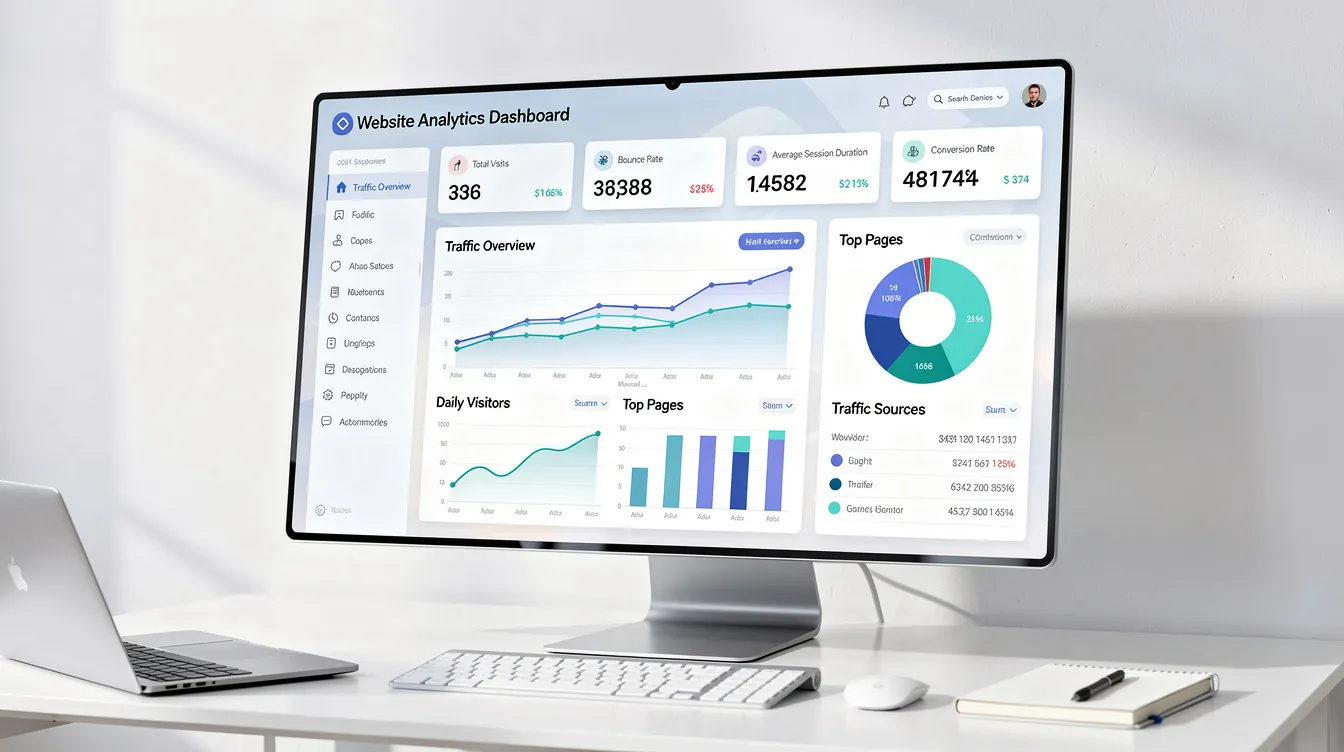
- Analytics from day one: Set up google analytics and Search Console immediately to validate messaging and measure interest. Without analytics tools, iteration is guesswork.
- Speed matters: EZPages.Pro regularly launches MVP sites in 2–3 weeks with the option to iterate every sprint. Over 30 startups have grown from MVP to reliable products using this kind of focused approach. MVP development helps validate business ideas affordably.

Structuring Your Content and Site Architecture
Clear site structure is essential for both real users and search engines. A well-structured website can significantly reduce bounce rates.
- Create a simple sitemap: For SaaS or product startups, plan pages around features, pricing, FAQs, and user journeys-not internal org charts.
- Group content by user intent: Organize around "learn," "compare," and "buy/sign up" paths. Use relevant keywords naturally in headings, URLs, and navigation labels.
- Internal linking and headings: Descriptive H1–H3 headings and internal links improve both UX and SEO discoverability.
- EZPages.Pro helps founders translate pitch decks and Notion docs into a logical content blueprint, saving weeks of content repositioning.
Design Services for Startups: UX and UI Fundamentals
Design for early-stage startups must balance clarity, conversion, and speed to market. Investing in UX can yield a $100 return for every $1 spent, and a well-executed user interface can increase conversions by up to 200%.
- UX basics: Simple navigation, prominent CTAs, and clear paths to signup or purchase. Confusing interfaces can drive users away and increase bounce rates.
- UI in 2026: Readable typography, accessible color contrast, consistent design elements and iconography across all pages. Consistent branding across all pages helps build trust with visitors.
- Accessibility: Standards like ADA and WCAG improve inclusivity for users with disabilities. Enterprise clients and investors increasingly treat WCAG 2.1 AA compliance as a requirement.
- EZPages.Pro's design services create wireframes and high-fidelity responsive layouts optimized for conversions, applying user centric designs and best practices that focus on building trust quickly and maximizing user experience.
Mobile-Friendly and Responsive Design
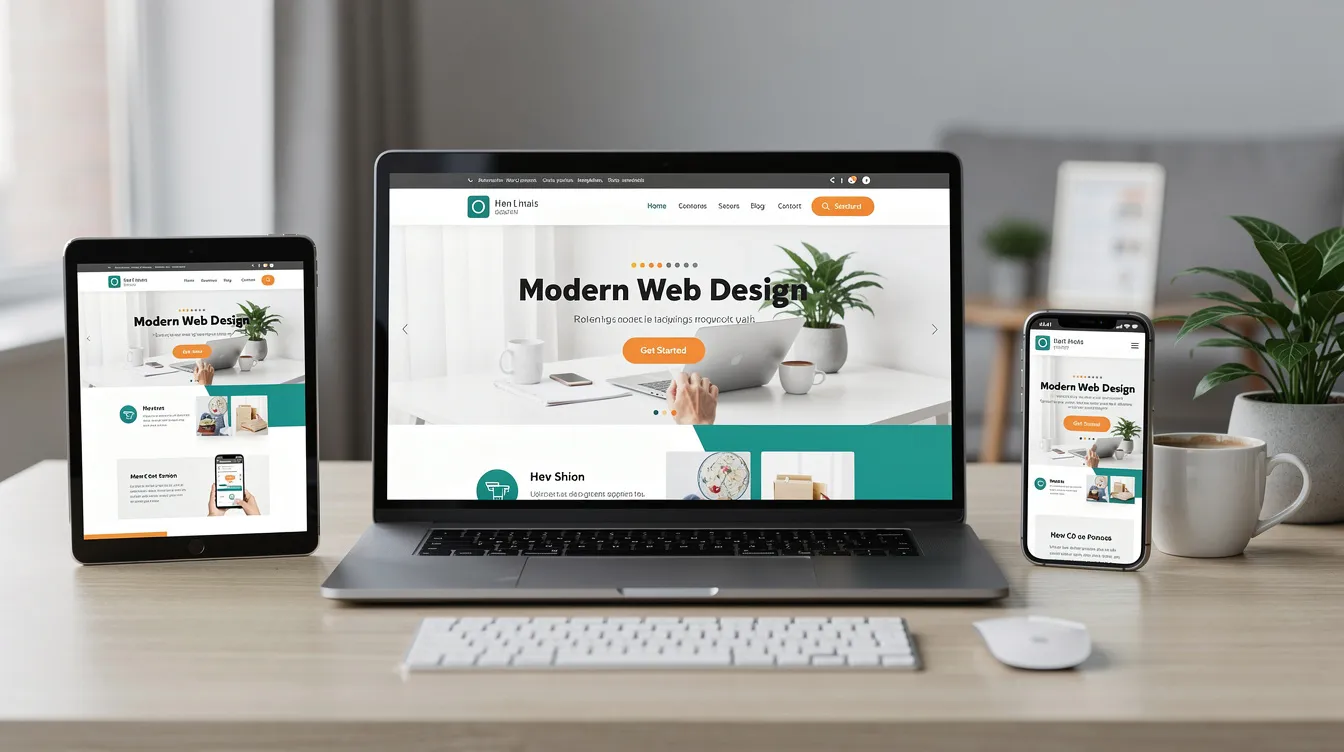
Over two-thirds of web traffic comes from mobile devices globally. Responsive design is essential since over half of all web traffic is on mobile devices-in emerging markets, that figure exceeds 70–80%. Startups should prioritize mobile-responsive design for their websites, investing in high-performance, secure custom websites with SEO-focused design.
- Mobile-first approach: Narrow-screen mockups created before desktop versions ensures content hierarchy works on the smallest screen sizes first.
- Thumb-friendly buttons and simplified navigation for smaller screens. Avoid hover-only interactions and deeply nested menus.
- Performance techniques: Lazy-loading images, compressing visuals into modern formats (WebP, AVIF), and minimizing heavy scripts for mobile.
- EZPages.Pro uses Duda's infrastructure to ensure consistent, responsive web design on phones, tablets, and desktops-with adaptive image serving and a global CDN built in.

Performance, Load Times, and Core Web Vitals
Since Google's 2021–2024 updates, load times and Core Web Vitals strongly influence both SEO rankings and conversion rates. Fast websites convert better and rank higher in search engines. Optimize for speed by reducing page load times using efficient coding practices, ideally on high-performance, secure websites with custom design and SEO features.
- Target load times: Pages should ideally load in under 2.5 seconds. Only about 51% of websites currently pass all three Core Web Vitals; mobile performance trails desktop significantly.
- Key tactics: Image optimization, caching, content delivery networks (CDNs), clean code, and limiting third-party scripts.
- Impact on paid acquisition: When ads lead to slow landing pages, bounce rates climb and ad spend is wasted. Improving LCP from ~4s to ~2.3s has delivered 3.2× ROI in documented cases.
- EZPages.Pro leverages enterprise-grade hosting, built-in caching, and performance monitoring to keep your website's performance consistently strong.
SEO Foundations for Startup Websites
Early-stage SEO is about being discoverable for brand and category-defining terms. SEO best practices involve conducting keyword research and optimizing on-page elements, and many founders benefit from following essential SEO strategies tailored for startups.
- Keyword research: Focus on problem keywords, solution keywords, and competitor alternatives using popular tools like Google Keyword Planner or Ahrefs.
- On-page SEO: Title tags, meta descriptions, proper heading structure, and schema markup for products or SaaS tools.
- Technical SEO: Clean URLs, XML sitemap, robots.txt, HTTPS, and avoiding duplicate content.
- EZPages.Pro includes on-page and technical SEO setup in every build-even for MVPs-so your site is discoverable from day one.
Security, Compliance, and Privacy by Design
In 2026, users and regulators scrutinize data handling more closely than ever. Visitors need reassurance of a startup's credibility through trust indicators, and security is a major one.
- Baseline security: Implement SSL certificates to prioritize website security. Add secure hosting, regular automated backups, and update management.
- Privacy compliance: GDPR for EU visitors, CCPA/CPRA for California, and cookie consent banners are non-negotiable for global startups.
- Accessibility: WCAG 2.1 AA compliance is now expected by larger organizations and investors alike.
- EZPages.Pro bakes in enterprise-grade security, automated backups, and compliance-ready templates from the start-not as expensive add-ons.
Quality Assurance and Testing Before Launch
Skipping quality assurance is one of the most common mistakes in startup website launches. Testing ensures the website meets user requirements before launch.
- Functional testing: Forms, payment flows, search, and integrations like chat or booking tools.
- Cross-device and cross-browser: Chrome, Safari, Firefox, Edge, plus popular mobile devices.
- Performance and accessibility scans: Broken link checks, Lighthouse audits, and screen reader testing.
- EZPages.Pro uses both automated and manual QA checklists before every go-live, catching issues that would otherwise erode user trust.
Typical Development Process for Startup Websites
A proven, repeatable development process keeps projects on track. Discovery and planning is the first step in website development, and long-term growth is supported by website management services focused on small business growth.
- Phases: Discovery → Design → Development → Testing → Launch → Continuous Optimization.
- Timelines: A typical website development timeline is 1–4 weeks for simple sites; more complex web apps take 6–12 weeks or longer. Startups should focus on launching quickly while ensuring scalability.
- Clear communication: Weekly check-ins, shared prototypes, and clear milestones led by project managers prevent delays.
- EZPages.Pro structures projects in short sprints with demos at each stage, ensuring reliable delivery and transparent progress.
How EZPages.Pro Builds Startup Websites from Concept to Launch
EZPages.Pro's development process is built for startup speed and clarity.
- Strategy call: The development team reviews pitch decks, current tools, and short-term milestones to define project scope.
- Lean sitemap and wireframes: Core pages, content outline, and CTA priorities are tailored to the startup's runway and resources.
- Collaborative iterations: Shared prototypes with clear approval checkpoints keep founders in control without micromanagement.
- By launch day, hosting, analytics, SEO, and security are already configured and tested-ready for real users.
Coordinating with Project Managers and Your Dedicated Team
Strong clear communication is critical for lean startup teams juggling product, fundraising, and hiring, especially when working with a professional website management service to streamline success.
- Single point of contact: Project managers coordinate design, development, and QA so founders don't manage multiple vendors.
- Dedicated team model: A fixed squad aligned to your startup for the project duration, with consistent context and accountability.
- Best practices for founders: Weekly 30–45 minute stand-ups, shared task boards, and clear deadlines keep momentum.
- EZPages.Pro offers a single, globally available PM who centralizes all requests and updates.
Integrations and Functionality Modern Startups Need
Even an MVP website should integrate with key tools in your technology stack. Choosing the right technology stack and right platform early saves painful migrations later, especially when you plan to use integrated apps to extend your website functionality.
- Common integrations: CRM (HubSpot, Salesforce), email tools, live chat, booking calendars, and payment processors for e commerce.
- Event tracking: Understand funnels from landing pages to signups or demos using analytics tools.
- CMS setup: Non-technical founders can add case studies, blog posts, and landing pages without developers-no technical skills required.
- EZPages.Pro sets up custom widgets, chat apps, and dashboards using Duda's platform, delivering innovative solutions that work out of the box.
Content That Converts: Messaging, Social Proof, and Visuals
Code and visual design are only as effective as the words and proof they present. Use social proof like testimonials and case studies to establish credibility.
- Benefit-oriented headlines: Clear, specific above-the-fold copy that communicates what you do and why it matters in under 10 seconds.
- Social proof: Real customer quotes, pilot results, or early metrics (e.g., "1,200 beta users since March 2025") build immediate trust. Regularly updating website content enhances trust and engagement.
- Visual clarity: Product screenshots, short explainer videos, and diagrams clarify complex offerings without overwhelming visitors.
- EZPages.Pro can help structure and lightly edit founder-provided content for clarity and impact-a great tool for non-writer founders.
Common Mistakes Startups Make with Website Development
These common mistakes have derailed many startups since 2018:
- Overbuilding too early: Adding complex features before validating product-market fit wastes time and budget. MVP websites allow gathering feedback from early adopters before scaling.
- Ignoring mobile users: Poor mobile performance kills web traffic from ads and organic search alike.
- Weak CTAs and scattered navigation: If visitors can't see what action to take, they leave. A strong online presence requires focus.
- Neglecting maintenance: Broken features, outdated content, and security vulnerabilities erode the brand identity and credibility you worked hard to build.
Ongoing Support, Maintenance, and Iteration
Launch is the start, not the end. Websites should evolve quickly to meet changing user needs and feedback, which is why many founders rely on managed website services to enhance their online presence.
- Routine tasks: Updates, backups, uptime monitoring, and security patching. Ongoing maintenance costs range from £50 to £100+ per month.
- Data-driven improvements: Use analytics and heatmaps to guide monthly or quarterly UX and content refinements.
- Iterative testing: A/B tests on headlines or CTAs can steadily raise conversion rates over time.
- EZPages.Pro offers fully managed hosting and continuous site management as part of its packages-an effective online presence that stays effective.
Cost and Timeline Expectations for Startup Websites
Pricing depends on feature complexity, integrations, and content scope. Startup website development costs range from $2,000 to $50,000 depending on needs. Basic informational websites cost between £150 and £700, while custom websites with complex features can cost £500 to £2,000. A simple marketing site may cost under $10,000, and choosing affordable website plans for startups and small businesses helps align budget with growth stages.
| Project Type | Typical Timeline | Approximate Cost |
|---|---|---|
| Lean MVP / Marketing Site | 2–4 weeks | Low-to-mid four figures |
| Advanced Site with Custom Features | 6–12 weeks | Mid four to five figures |
| Complex Web App / Platform | 2–4 months | Five figures and up |
Startups should prioritize core features first, then schedule phase-two enhancements post-launch. EZPages.Pro uses transparent flat-rate packages with clearly defined deliverables and no hidden fees.
How EZPages.Pro Compares to DIY Builders and Traditional Agencies
EZPages.Pro sits between DIY tools and high-cost agencies in terms of speed, control, and quality.
- Speed: 2–4 week delivery target vs. the 8–12 week average of traditional agencies.
- All-in-one: Hosting, security, SEO, and updates bundled-unlike DIY platforms that require juggling multiple vendors and unreliable plugins.
- Global reach: Experience in 14 countries helps handle multilingual, multi-region setups from day one.
- Enterprise performance: Startups get enterprise-level uptime and speed thanks to EZPages.Pro's partnership with Duda-without enterprise price tags.

Case Snapshot: How a Startup Can Grow from MVP Site to Global Presence
Consider a hypothetical B2B SaaS startup launching between 2023 and 2026:
- Phase one (Month 1): Launch a simple MVP website in under a month focused on demo bookings and waitlist emails. Five pages, one clear CTA, analytics configured.
- Phase two (Months 3–6): After a seed round, add localized pages for two new markets, run pricing experiments, and publish onboarding content. Early traction data guides every change.
- Phase three (Months 9–18): Scale to multiple regions with role-based content for different buyer types, advanced analytics dashboards, and social media platforms integration.
- EZPages.Pro supports each phase with the same managed platform, avoiding costly full rebuilds as the startup grows.
Global Considerations: Building for Multiple Markets from Day One
Cross-border startups must think about language, currency, and regulatory differences from the very beginning.
- Localization over translation: Messaging, cultural nuance, date/currency formats, and regional testimonials matter. Direct translation leads to poor UX.
- Geo-specific compliance: GDPR for EU visitors, various data privacy laws in Asia and Latin America, and cookie consent requirements.
- Region-based navigation: Automatic locale detection, hreflang tags, and localized SEO with relevant keywords in each language.
- EZPages.Pro's global client base in 14 countries informs practical guidance on international rollouts-sell products and services across borders with confidence.
Analytics, Experimentation, and Data-Driven Decisions
Data from week one should guide iterations instead of opinions.
- Basic setup: Google Analytics (GA4), Search Console, and goal tracking for key conversions-configured during development, not after.
- Funnels and drop-offs: Event tracking shows where users abandon signup or onboarding flows, revealing what content or UX changes will have the biggest impact.
- Simple experiments: A/B testing hero copy, button text, or pricing displays can meaningfully improve conversion rates with minimal effort.
- EZPages.Pro configures analytics during development and can assist with ongoing reporting to help founders make data-driven decisions.
When to Rebuild vs. Incrementally Improve Your Startup Website
Not every issue requires a full redesign. Running a quick ux design and technical audit helps decide.
- Incremental improvements work when: The site structure is sound but copy, CTAs, or design elements are weak. Refreshing content, tightening messaging, or improving load times can yield quick gains.
- A rebuild is needed when: Outdated technology, non-responsive design, or unfixable performance and security issues make patching impractical.
- EZPages.Pro often migrates startups off fragile DIY setups onto a stable, scalable managed platform-preserving SEO equity and improving the website's performance in the process.
How to Prepare Your Startup for a Successful Website Project
A short pre-project checklist for founders:
- Gather assets: Brand assets, product screenshots, existing copy or pitch decks, and any brand identity guidelines.
- Align internally: Co-founders should agree on must-have features versus nice-to-haves before the project begins. This defines the project scope clearly.
- Set realistic dates: Tie launch dates to events like demo days, accelerator cohorts, or ad campaigns for maximum impact.
- EZPages.Pro provides a structured onboarding questionnaire to capture all essential details, so nothing critical is missed.
Why Partnering with EZPages.Pro Accelerates Startup Growth
EZPages.Pro builds credibility and delivers results for early-stage and growing startups.
- Speed to market: Typical launch in 2–4 weeks with no compromise on security or performance.
- One-stop coverage: Custom web design, development, web hosting, security, SEO, and maintenance in a single service-your right partner for a strong online presence.
- Transparent pricing: Flat-rate packages prevent scope creep and unexpected invoices, ideal for startups on tight budgets.
- Global experience: Proven track record with startups operating in at least 14 different countries.
Call to Action: Launch or Upgrade Your Startup Website with EZPages.Pro
Now is the best time to move from idea or outdated site to a high-performing startup website.
- Book a discovery call: Review your current site or concept with an EZPages.Pro specialist who understands what startup founders need.
- Bring your roadmap: EZPages.Pro will propose a phased website development plan that fits your timeline, budget, and growth goals.
- Every project includes managed hosting, enterprise security, and ongoing support-no surprise invoices.
Schedule your 20-minute strategy call with EZPages.Pro today and turn your startup's website into the growth engine it should be.
Frequently Asked Questions (FAQs) About Website Development for startups
Below are answers to common questions from founders evaluating EZPages.Pro for their startup web development services.
How fast can EZPages.Pro launch a new startup website?
Most MVP and marketing-focused startup websites go live in 2–4 weeks, assuming timely content and feedback from the founder. More complex projects with custom logic or integrations may take longer but still follow a structured sprint schedule with clear milestones at each stage.
Do I need any technical skills to work with EZPages.Pro?
No coding or design skills are required. Founders mainly provide goals, feedback, and content insights. After launch, EZPages.Pro sets up an easy-to-use, user friendly editor so your team can update text, images, and simple sections without needing a developer.
Can EZPages.Pro migrate my existing site from Wix, WordPress, or Webflow?
Yes. EZPages.Pro routinely migrates sites from common builders and CMS platforms to its managed Duda-based infrastructure. The migration process typically includes design refinements, performance improvements, and updated SEO settings so you don't lose search engine visibility.
What happens after launch if my startup pivots or raises a new funding round?
The site structure is designed for flexibility, allowing new pages, messaging updates, and navigation changes without a full rebuild. EZPages.Pro can schedule iterative updates or ongoing retainers to align the website with new positioning, products, or markets as your startup evolves.
Is EZPages.Pro a good fit if my startup is still pre-revenue?
Absolutely. EZPages.Pro often works with pre-revenue teams that need a credible, investor-ready online presence on a sensible budget. Founders can start with a lean MVP website now-focusing on the crucial steps that create early traction-and expand features as funding and revenue grow.

EzPages.Pro specializes in small business web management and web development for small businesses and startups. Our tailored solutions simplify content updates, track performance with analytics, and ensure smooth site operation. With our all-in-one management services, you can focus on growing your business while we handle the rest.
🚀 Let’s build something great together.
EZPages blog